
Armed conflict · Maritime security
The Houthis took Mokha. Holding the coast is another matter
The rapid advance has brought Houthi forces to Bab el-Mandeb and stripped Yemen’s government of its principal position on the western coast. Their next challenge is to defend those gains. For their opponents, it is to build a force capable of contesting them.

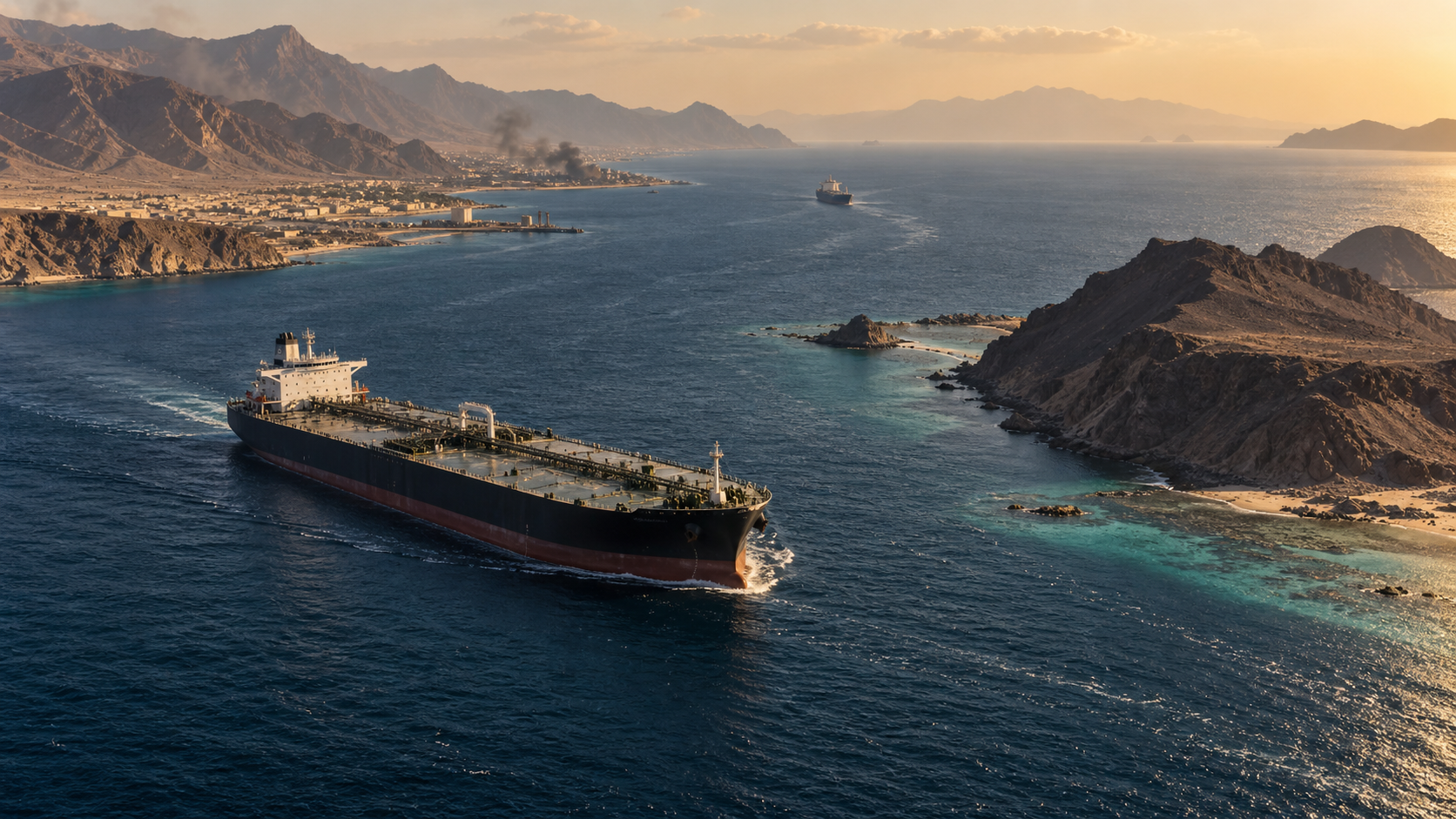
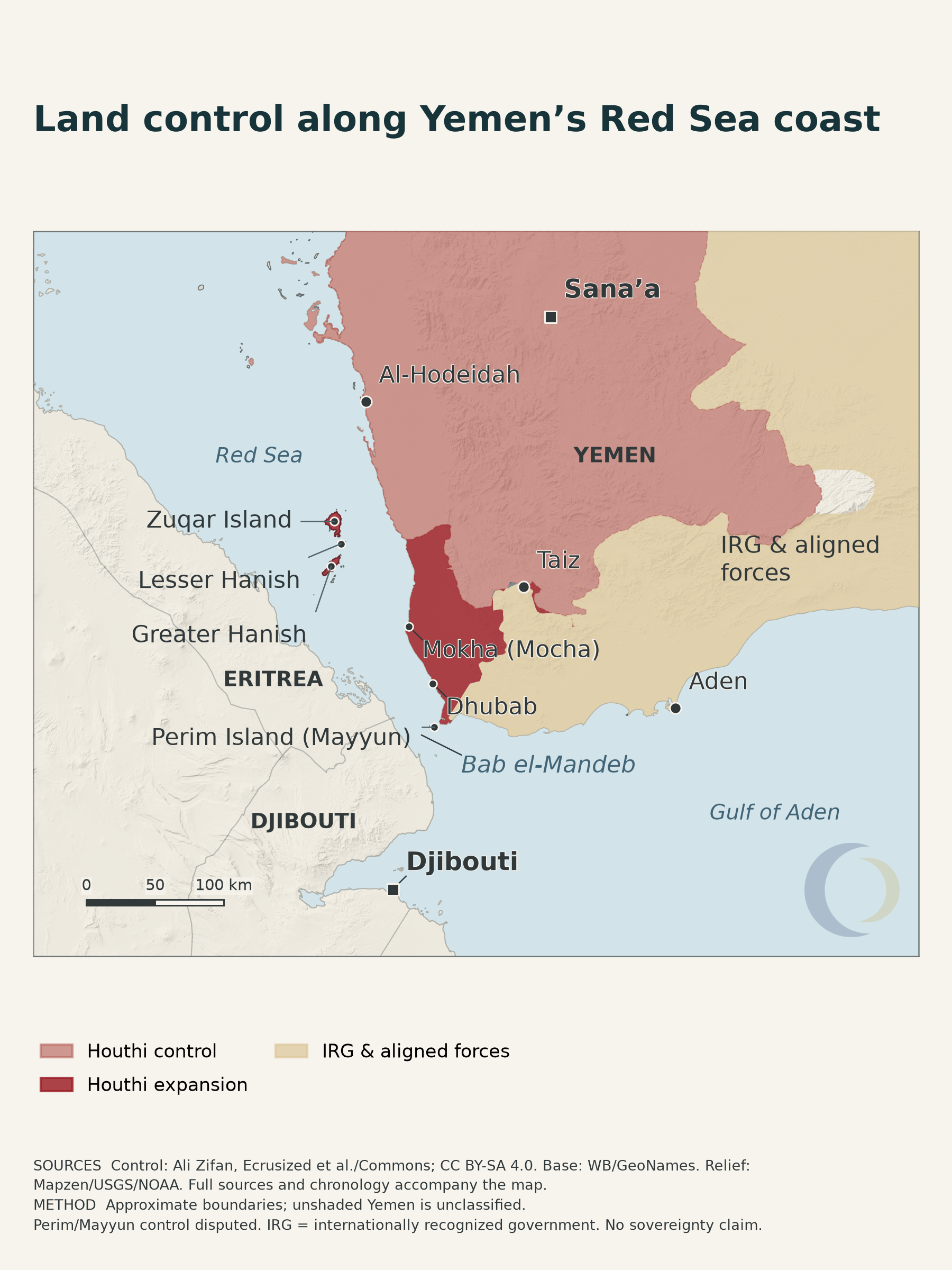
On 10 September, government-aligned forces withdrew from Mokha, the port from which Tareq Saleh’s National Resistance had defended much of Yemen’s Red Sea coast south of Hudaydah. Houthi forces moved on to Dhubab, overlooking Bab el-Mandeb, and advanced onto islands farther north. They also reached Mayyun, or Perim, inside the strait, although reports about who now holds the island conflict. A front that had changed little during four years of relative calm gave way in days. Sana’a Center; ISW.
The advance has obvious implications for shipping. It also deprived the internationally recognised government of a coastal base and brought the Houthis closer to roads serving Taiz. The speed of the withdrawal deserves as much attention as the territory gained. Unless government-aligned forces address why their defence failed, they may struggle to reverse it.
Why Mokha fell so quickly
The Houthis had prepared for a renewed campaign. During the lull that followed the 2022 truce, they recruited fighters and improved their weapons capabilities. Their opponents remained a collection of forces with different commanders, political aims and histories of Saudi or Emirati support. Riyadh’s more recent efforts to bring them under a common command had not yet produced a dependable defence on the western coast. Chatham House.
Western, regional and Yemeni sources interviewed by Reuters pointed to divisions among government-aligned forces, an untested command structure, limited air support and a failure to recognise the scale of Houthi preparations. Those accounts help explain the collapse, but they do not yet establish precisely why individual units withdrew when they did.
Much of the criticism has fallen on Saleh, whose forces were based in Mokha. His decisions warrant scrutiny. Treating him as the sole cause, however, would leave the larger problem intact: Yemen’s Presidential Leadership Council has struggled to coordinate the forces it nominally oversees, while Saudi Arabia has remained reluctant to commit itself to another major ground campaign. Replacing commanders may answer questions about the retreat without producing a force capable of retaking and holding the coast. Sana’a Center.
The fighting is moving beyond the shoreline
Taking the coast quickly is different from defending it. The open plain offers limited cover, while Houthi positions around Mokha and Dhubab depend on roads that aircraft can strike. Government-aligned forces appear to have stopped further Houthi movement south along the coast since 11 September. Airstrikes have targeted positions and supply lines, and fighting has continued around the high ground and roads inland from Bab el-Mandeb. ISW; Al Majalla.
Those inland approaches matter to both sides. The Houthis need them to reinforce the coast and to put pressure on routes connecting Taiz with government-held areas farther south. Government-aligned forces need to hold them if they intend to contain the advance, let alone recover Mokha. Airstrikes may slow Houthi movements; they cannot substitute for troops able to coordinate an attack and remain in the territory afterwards.
Time cuts both ways. The longer the Houthis hold their new positions, the more opportunity they have to prepare defences and secure their supply routes. Yet an extended coastline and small islands require continual support under air attack. A counteroffensive is possible, but the divisions revealed at Mokha make its success far from assured. Sana’a Center.
Mayyun illustrates the uncertainty. Reports described Houthi forces taking the island after government troops withdrew. A later account said the Houthis had left; ISW could not verify that report. The island’s status should not be presented as settled. Nor would holding it, on its own, give the Houthis command of every vessel passing through an international strait.
Riyadh’s response has limits
Saudi Arabia spent years trying to reduce its direct involvement in Yemen. The loss of Mokha now presses it to strengthen government-aligned forces, while Houthi missile and drone attacks demand attention at home. Riyadh can continue striking coastal positions and help its Yemeni partners regroup. A sustained campaign to recover the territory would require a more coherent ground force and a willingness to risk another prolonged war.
Further strikes alongside attempts to negotiate appear more likely in the near term than a large Saudi-led ground offensive. Talks could address passage through Bab el-Mandeb, but would not by themselves decide who governs the coast or restore the internationally recognised government’s authority there. Western officials told Reuters that the United States and European countries were not prepared to provide direct military backing for a counteroffensive.
Washington has also maintained a separate channel to the Houthis. US officials met Houthi representatives in Oman as both sides sought to preserve their 2025 ceasefire and avoid attacks on American shipping. That does not settle the Saudi-Houthi conflict. It shows that Riyadh cannot assume its partners will respond to threats against Saudi interests in the same way they would respond to a general closure of the Red Sea. Reuters.
The Houthis have demands of their own: easing restrictions affecting Hudaydah port and Sana’a airport, payment of public-sector salaries, compensation for the war and an end to Saudi support for the government’s military campaign. Iranian assistance and the wider regional conflict have influenced this offensive. The movement is also pursuing an advantage in Yemen’s unresolved war. Reuters.
Shipping was already pulling back
The Houthis did not need Mokha to disrupt Saudi trade. After declaring an embargo on Saudi-bound vessels on 20 July, they attacked several tankers in August. EIU’s analysis of port data recorded just nine tanker calls at Saudi Arabia’s western ports that month, down from 189 in July. The territorial advance did not cause that earlier decline.
It may make the threat easier to maintain. Positions closer to Bab el-Mandeb offer more opportunities to observe vessels and potentially deploy shorter-range weapons. Much depends on what the Houthis can move into the territory and keep there under attack. The strait remains open; increased ability to threaten particular ships is not the same as the ability to stop all traffic.
For Yemenis, the consequences are less conditional. The United Nations estimates that about 125,000 people have fled their homes since the fighting intensified. Families have reached Taiz from the west coast while combat continues around the routes they used to leave. Renewed fighting over Mokha, Dhubab and the inland roads would prolong that displacement in a country already strained by years of war. Associated Press.
The next decisive developments may occur away from the water. If government-aligned forces hold the inland approaches and reorganise, the Houthi position on the coast could remain vulnerable. If the Houthis secure those roads and fortify their new positions, removing them will become harder. Mokha fell quickly because one side was prepared and the other was not. Holding or recovering it will demand more than either side has yet demonstrated.
Speak with our analysts
What does this mean for your organization?
If developments in Yemen and the Red Sea could affect your operations, routes or partners, our analysts can help you assess what has changed and what to monitor next.
Contact our analysts