
Maritime security · Armed conflict
Bab el-Mandeb: The alternative to Hormuz is becoming another front
The Houthi advance along Yemen’s Red Sea coast has reached Bab el-Mandeb. After taking Mokha on 10 September, Houthi forces moved south to Dhubab and Perim, placing them directly inside one of the world’s most important shipping corridors. The strait remains open, but Saudi Arabia is now under pressure at the same time on the Red Sea, at Hormuz and along the infrastructure linking the two.
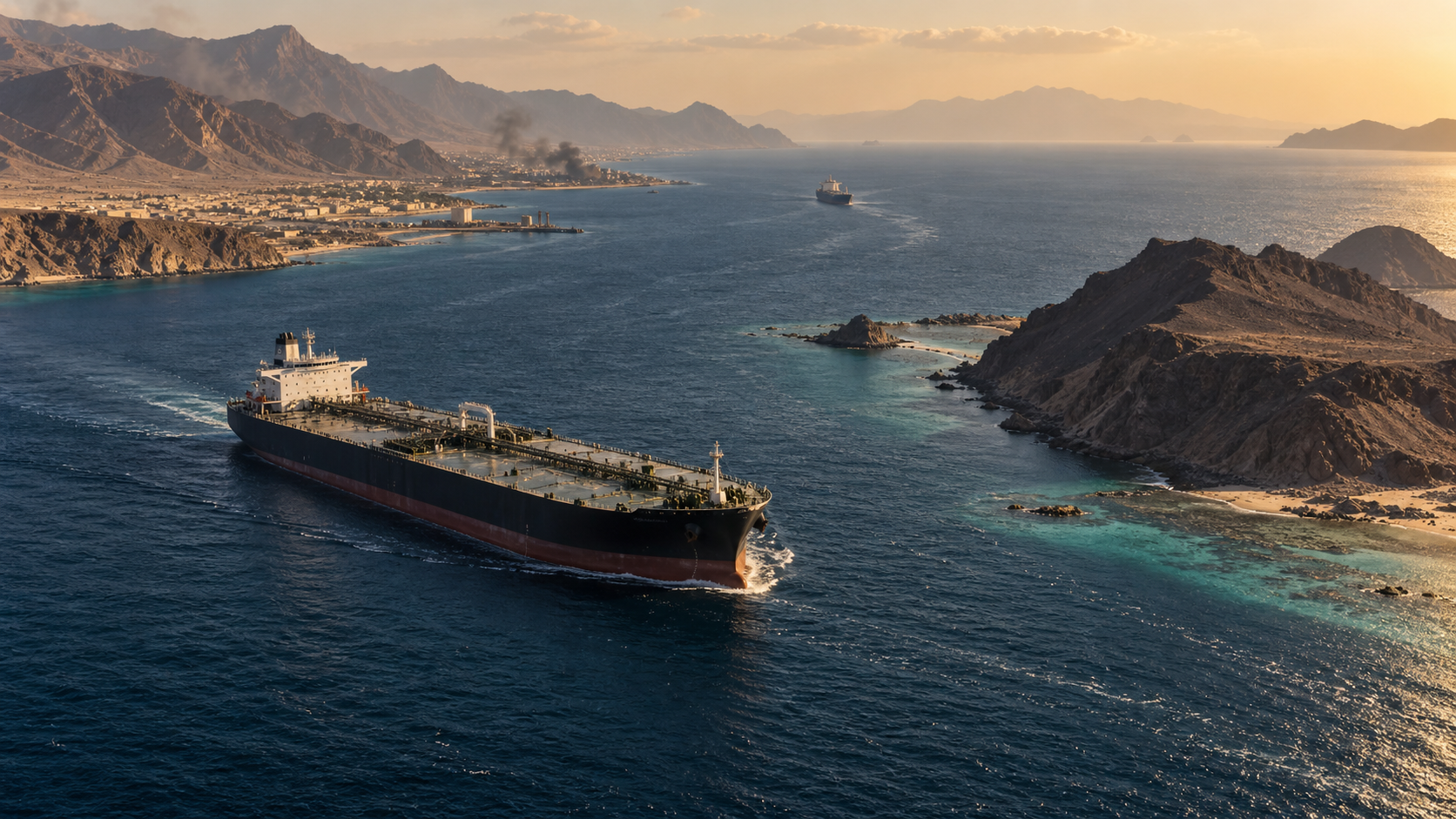
The speed of the advance matters. On 10 September, the Houthis entered Mokha after pushing through southern Hudaydah and western Taiz. Within another day, they had reached Dhubab, directly on Bab el-Mandeb, and Perim, also known as Mayyun, which sits between the strait’s two channels. They had also advanced onto the Hanish Islands farther north. Positions that were still possible next objectives when Mokha fell became Houthi-held territory within hours.
This does not give the Houthis absolute control of Bab el-Mandeb. It does, however, bring observation, personnel and weapons much closer to vessels entering and leaving the Red Sea. It also weakens the government forces that had previously secured Yemen’s southwestern coast.
The Houthis have reached the strait
Mokha mattered because it anchored the southern end of the government-held Red Sea coast. Forces operating from the area monitored maritime traffic, intercepted weapons and maintained connections with Taiz and positions farther south.
Dhubab and Perim matter more directly to shipping. Dhubab overlooks the strait from the Yemeni mainland. Perim sits inside Bab el-Mandeb itself. Holding either position does not automatically give the Houthis the ability to stop commercial traffic, but controlling both gives them better access to vessel movements and more options for deploying surveillance equipment, drones or missiles near the waterway.
The operational question has therefore changed. It is no longer whether the Houthis continue south from Mokha. They have. The question is what they can move into the territory they have captured, how quickly they fortify it and whether Saudi or Yemeni forces try to push them back.
Holding exposed coastal positions will remain difficult. Saudi air power can strike roads, vehicles, launch sites and concentrations of fighters. Perim is particularly vulnerable because its geography limits concealment and reinforcement. The Houthis nevertheless do not need permanent control of every position to increase the risk faced by shipping. Even temporary deployments can complicate maritime surveillance and force operators to reconsider a transit.
Iranian support also appears to have played a more direct role in the offensive than could be established when the advance began. Reuters reported, citing Yemeni, Iranian and regional sources, that the operation benefited from direct IRGC guidance as well as Iranian weapons and intelligence. That strengthens the connection between the campaign in Yemen and the wider confrontation involving Iran.
This does not mean that Houthi objectives simply mirror Tehran’s. The movement still has its own interests inside Yemen: weakening rival forces, improving its position in negotiations with Saudi Arabia and extending control over territory that could matter in any future settlement. The advance serves both local and regional goals.
Saudi Arabia’s alternative to Hormuz is under pressure from several directions
The importance of Bab el-Mandeb has increased because traffic through Hormuz remains heavily disrupted. Before the current war, Hormuz carried more than 20 million barrels of oil a day. Shipping through the strait has since fallen sharply, forcing Saudi Arabia to rely more heavily on its East–West pipeline and Red Sea terminals.
That system was designed precisely to reduce Saudi dependence on Hormuz. Crude can travel across the kingdom to Yanbu and then leave through the Red Sea. Cargo destined for Europe can move north towards Suez, while exports to Asian markets normally need to travel south through Bab el-Mandeb.
The Houthi advance therefore threatens the southern end of a route that has become more important because another route is already constrained.
Saudi Arabia now faces an additional problem. On 11 September, drones launched from Iraq struck the East–West pipeline, causing damage and injuries. Riyadh temporarily shut the 1,200-kilometre pipeline as a precaution. Before the shutdown it had been moving roughly 4–5 million barrels a day, making it one of the kingdom’s main alternatives to Hormuz. Iraqi authorities subsequently confirmed that the drones had originated from Iraqi territory and began taking action against those responsible.
The pipeline attack and the Houthi advance should not automatically be treated as parts of a single centrally directed operation. Their combined effect nevertheless matters more than their individual origins. Saudi Arabia has seen its main Gulf export corridor constrained, its cross-country bypass temporarily interrupted and the southern exit from the Red Sea become significantly more dangerous within the same period.
The redundancy built into Saudi export infrastructure remains valuable. But there are now fewer low-risk alternatives available at the same time.
The strait remains open, but traffic is already reacting
A physical closure of Bab el-Mandeb remains less likely than selective disruption. The strait has two channels, sits between several states and is watched by naval forces capable of intervening if the Houthis attempt to prevent international shipping from passing.
The Houthis have also continued to present their maritime campaign as selective rather than a general blockade. Saudi-linked vessels face the clearest declared threat, while the movement has indicated that other international traffic can continue. President Donald Trump said on 12 September that the Houthis had also contacted Washington and appeared keen to avoid direct US intervention.
For shipowners, those distinctions provide only limited certainty. Ownership structures are complicated, cargoes change hands, vessels call at several ports and Houthi definitions of affiliation have not always matched those used by commercial operators. A ship that does not consider itself connected to Saudi Arabia can still be exposed to mistaken identification, military activity nearby or an attack on another vessel.
There is now early evidence that operators are responding. Preliminary Kpler data showed only 15 vessels crossing Bab el-Mandeb on 11 September, compared with 30 the previous day. Six were leaving the Red Sea and nine were entering. One day of data does not establish a lasting trend, but the fall came immediately after the seizure of Dhubab and Perim.
This is the distinction that matters commercially. Bab el-Mandeb can remain technically open while becoming less attractive to use.
Insurers may raise war-risk premiums or restrict cover. Owners may reject fixtures or require additional security. Crews may become less willing to enter the area. Charterers can then decide that a longer voyage around Africa offers more certainty even when vessels are still physically capable of passing through the strait.
The resulting withdrawal would not necessarily happen across the entire fleet. Operators with different ownership, cargoes, insurance arrangements and tolerance for risk will make different decisions. Selective disruption can therefore coexist with continued traffic.
Riyadh is being pulled back towards Yemen
Saudi policy since the 2022 truce sought to reduce direct involvement in Yemen while maintaining influence over the anti-Houthi camp. The kingdom had strong reasons to avoid another large ground campaign after years of costly intervention.
The fall of Mokha, Dhubab and Perim makes that position harder to sustain.
Saudi Arabia can continue airstrikes, reinforce Yemeni partners, support a counter-offensive or attempt to reopen talks with the Houthis. None provides an easy way out. Air power can destroy equipment and disrupt reinforcement without guaranteeing that government forces can retake territory. Yemeni factions have military experience but remain divided by separate political interests and command structures. A larger campaign could recover coastal positions while drawing Riyadh back into the war it spent years trying to leave.
The urgency of the issue is already apparent. Mohammed bin Salman asked Trump for US military assistance against the Houthis after their advance. Washington has so far declined direct military intervention and offered intelligence assistance instead.
That leaves Riyadh with a difficult choice. Allowing the Houthis to consolidate positions around Bab el-Mandeb increases the long-term threat to Saudi shipping and gives them greater leverage in negotiations. Trying to remove them could reopen a major front in Yemen without a clear route to a durable military outcome.
The US faces a similar problem. Direct intervention could protect a major international waterway but would increase US involvement in another front connected to the conflict with Iran. Staying out reduces that risk while leaving a partner under increasing pressure.
Commercial pressure may now move faster than the fighting
The front line is no longer the main early-warning indicator. The next signals are what the Houthis do with the territory they have taken and how commercial operators respond.
Military deployments on Perim and around Dhubab will matter. Construction of protected positions, the movement of missile or drone systems, new radar equipment or attempts to restrict access around the island would suggest that the Houthis intend to use their gains for more than political leverage.
A Saudi-backed counter-offensive would create a different risk. Fighting around Dhubab or Perim could threaten passing vessels even if neither side deliberately targets them. Airstrikes close to shipping lanes would also complicate transit decisions.
The definition of Houthi targets remains equally important. A campaign focused primarily on Saudi-linked vessels would impose serious but uneven costs. Expanding that category to ships carrying Saudi cargo, serving Saudi ports or dealing with selected Western companies could affect a much larger part of the fleet.
Commercial indicators may provide the clearest evidence of how seriously the market views the threat. Transit numbers should now be watched over several days rather than interpreting the first fall in traffic as a permanent change. War-risk premiums, policy exclusions and notice periods will show how insurers are responding. Saudi loadings at Yanbu will indicate how much the pipeline shutdown is affecting exports and whether cargoes can be redirected.
Freight markets are already under pressure elsewhere in the region. Tanker rates reached record levels this week as attacks and restrictions around Hormuz reduced vessel availability. Further diversion from Bab el-Mandeb would tighten that market again by keeping ships at sea for longer voyages around Africa.
For companies, the important distinction is between whether a particular vessel can still pass and whether the wider supply chain remains dependable. A transit may take place without incident while insurance costs increase, deliveries slip or counterparties refuse to accept the same level of exposure.
Contingency planning should therefore distinguish cargoes that can move north from Yanbu through Suez or SUMED, those that need to travel south through Bab el-Mandeb and those that can be sourced elsewhere.
Bab el-Mandeb remains open, but the situation has moved beyond the warning created by Mokha’s fall. The Houthis now hold positions directly on the strait, commercial traffic has begun to react and Saudi Arabia’s East–West pipeline has been temporarily taken out of service just as alternatives to Hormuz matter most.
The risk is not that every route suddenly closes at once. It is that each remaining alternative becomes less reliable, more expensive or more politically exposed at the same time.
Speak with our analysts
What does this mean for your organization?
If developments around the Red Sea and the Gulf could affect your routes, contracts or operations, our analysts can help you interpret the changes and decide what to monitor next.
Contact our analysts