
Elections · Political stability · Regulatory policy
Spain: Sánchez turns housing defeat into election gamble
The prime minister has called an election for 29 November after parliament rejected his emergency housing measures. The polls favour the right, but the result may say less about who can govern than the coalition talks that follow.
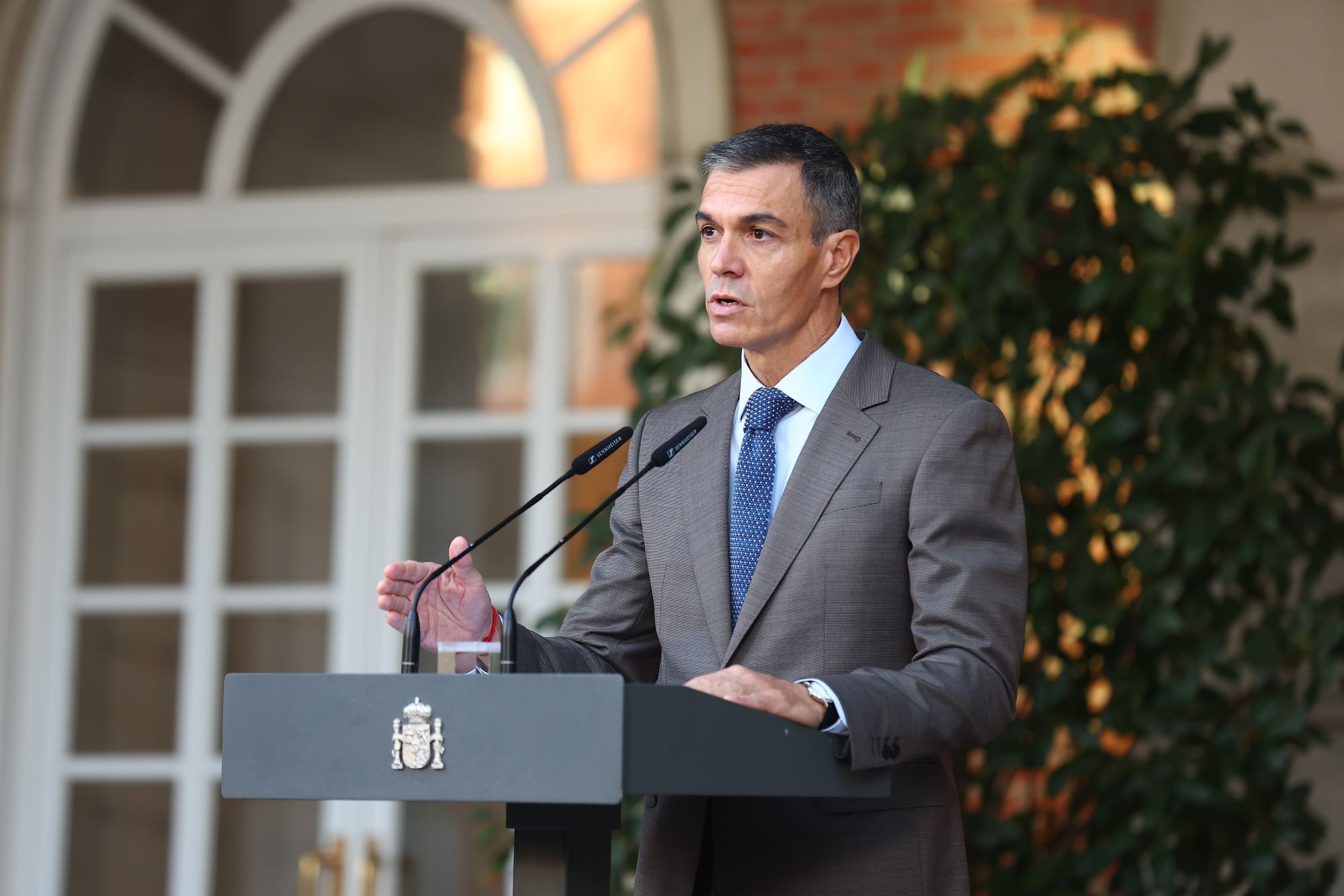
Three days separated the defeat of Pedro Sánchez’s housing decrees from his decision to dissolve parliament.
The measures had followed weeks of protests and public anger over the eviction of an 87-year-old tenant in Madrid. They would have extended protections against some evictions, restricted the acquisition of distressed housing portfolios, regulated seasonal and room rentals, and given tenants greater security when leases expired. The PP, Vox, Junts and UPN voted them down.
Sánchez responded on 5 October by calling an election for 29 November, eight months before the end of the parliamentary term. In his announcement, he argued that Spain needed a larger progressive majority to pass reforms blocked by the outgoing parliament.
The defeat has given him an issue around which to fight the campaign. Housing costs have angered voters well beyond the left, particularly in Madrid, Barcelona, coastal cities and the islands. The PP would rather put corruption allegations, migration, the recent crisis in Ceuta and the cost of living at the centre of the contest. Vox will focus heavily on immigration and what it calls “national preference”.
The PP enters the campaign ahead in the polls, and a PP-Vox majority is plausible. That does not settle who will govern. The distribution of seats may still change substantially, and a victory for the right would open a second negotiation over Vox’s price for supporting Feijóo.
Housing defeat gives Sánchez an election issue
Sánchez has governed since 2023 through an unusually broad and increasingly unstable parliamentary arrangement. PSOE and Sumar formed the cabinet, but its survival depended on Catalan, Basque and Galician parties with few common interests beyond preventing a PP-Vox government.
That arrangement secured Sánchez’s investiture. It became much harder to manage when legislation required concessions over housing, taxation, regional financing or Catalonia’s relationship with Madrid.
Junts increasingly withheld support on key votes. Its economically liberal wing opposed measures it considered harmful to landlords and property owners, while its leaders accused the government of failing to honour agreements on Catalan autonomy. During 2026, Junts repeatedly joined the PP and Vox to defeat government proposals, including the fiscal path needed to begin preparing the 2027 budget.
Housing made that breakdown visible. The government negotiated with Junts until shortly before the vote and said it had accepted most of the party’s amendments. Junts still opposed both decrees. One would have restricted purchases of homes and distressed mortgages at less than 70% of assessed value while expanding tax incentives for permanently protected housing. The other would have strengthened renewal rights for residential tenants. Both decrees lapsed when Congress rejected them.
The decrees could not have solved Spain’s housing shortage on their own. Their defeat nevertheless showed that the government no longer had a dependable majority for one of its main domestic priorities.
Sánchez could have remained in office and governed through existing budgets and executive measures. Instead, he chose an election while the opposition’s housing vote was still fresh. That gives PSOE a chance to mobilise renters and younger voters. It also sends the party back to an electorate that has become less favourable since 2023.
Feijóo leads, but Vox holds the key
Most surveys place Alberto Núñez Feijóo’s PP ahead of PSOE. A 40dB poll released on the morning of the election announcement put the PP at 31.6%, PSOE at 27.4% and Vox at 18.4%. The survey was conducted before parliament rejected the housing decrees and before Sánchez called the election, so it offers a starting point rather than a measure of the political reaction.
A similar reading of the polls proved misleading before the 2023 election. The PP won the most seats but fell short of a governing majority with Vox. Sánchez stayed in office after securing support from Sumar and several regional parties.
The right begins this campaign from a stronger position. Vox is polling well above its 2023 result. Sumar has weakened, while competition with Podemos could split the left in provinces that elect only a few deputies. Spain’s electoral system punishes smaller parties when their support is divided among competing lists.
There is still room for the campaign to move. Parties have not completed their lists or settled all possible alliances. Housing protests could lift turnout among younger and urban voters who have shown little enthusiasm for the government in recent surveys. Vox may also be taking votes from the PP as well as from elsewhere. Small changes in provincial constituencies can alter the parliamentary total without producing much movement in the national vote.
A PP victory looks more likely than a PSOE victory, but the margin matters. Feijóo could lead the largest party and still need Vox to approve his investiture, pass budgets and keep the government in office.
If that happens, the next contest will be over the terms Vox demands for putting him there.
Vox would demand a price for backing Feijóo
Vox leader Santiago Abascal used the first day of the campaign to set out his terms: “national preference”, deregulation and “remigration”. The party enters the election stronger than it was in 2023 and has already returned to coalition governments with the PP in several autonomous communities.
Those regional agreements provide some evidence of what a national negotiation might cover. Vox has demanded priority for Spanish citizens in access to public housing and social assistance, stricter immigration enforcement, lower taxes and the removal of environmental and administrative rules. It has also sought control over departments responsible for agriculture, the environment and deregulation.
The PP shares parts of that agenda but not all of it. Feijóo has promised income-tax reductions, faster housing construction, shorter planning procedures and greater legal protection for property owners. His housing proposals put more emphasis on land, supply, guarantees and help for buyers than on rent controls. The PP also wants to extend the operating life of Spain’s nuclear plants while continuing to develop renewable power.
A government formed on those terms would probably reverse or narrow parts of Sánchez’s housing policy. It could reduce national rent regulation, reconsider proposed restrictions on non-EU property buyers and put planning reform at the centre of its response to the shortage. Property, construction and energy companies may initially welcome some of those changes.
Other parts of the coalition agenda would create different pressures. Tighter migration policy would affect sectors that rely heavily on foreign labour, including construction, agriculture, hospitality and care. Large tax cuts would have to fit Spain’s European fiscal commitments as well as the spending priorities of two governing parties. Attempts to roll back climate regulation could run into EU law, regional authorities and the permitting conditions attached to existing projects.
Vox’s leverage would depend on how many seats it wins and which ministries it demands. Supporting Feijóo from outside government would leave the PP with more control over appointments but force it to negotiate every budget. A formal coalition would give Vox direct authority over parts of the state.
Sánchez still needs the parties to his left
Sánchez’s route back to office is narrower. PSOE would have to recover ground during the campaign while ensuring that parties to its left win enough seats to remain useful coalition partners. It would then need renewed cooperation from regional parties whose disputes with Madrid have intensified.
Housing gives the government its best chance to change the campaign. Spain’s economic growth continues to outpace much of the euro area, employment has reached record levels and temporary work has fallen since the 2021 labour reform. None of that has made housing more affordable. The Bank of Spain estimates a shortage of roughly 750,000 homes, concentrated in the largest cities, coastal areas and centres of employment.
The government will argue that the opposition blocked protections supported by voters. Sánchez is also likely to defend the expansion of public housing, regulation of temporary rentals and the use of public funds to keep protected homes permanently within the affordable stock.
That may bring back some voters who had drifted away from the governing parties. It may not repair the split between Sumar and Podemos or rebuild the alliance with Junts. PSOE could outperform current polls and still find itself without a workable majority.
A left-led government would broadly preserve the direction of housing, labour and energy policy. Its room to legislate would depend on the parliamentary arithmetic. If Sánchez again needed Junts, the same disputes over property regulation, regional financing and Catalan powers would return immediately.
Sánchez could stay in office and still face much the same parliamentary problem.
A hung parliament would push the budget into 2027
The election may produce no viable majority at all.
Spain could spend several weeks under a caretaker administration while party leaders try to assemble the 176 votes needed for an absolute majority, or enough abstentions to win a second investiture vote. If neither bloc succeeds, another election would become possible.
That delay would come at a difficult point in the fiscal calendar. Parliament’s dissolution prevents the outgoing government from completing a 2027 budget. Spain is therefore likely to begin next year using the budget first approved for 2023, extended for a fourth year while the next administration prepares its own accounts.
Existing spending would continue, and Spain does not face an immediate financing crisis. The European Commission expects domestic demand and investment to support growth, while the IMF projects expansion of around 2.1% in 2026 and 1.8% in 2027. The government has also submitted its final EUR 25.861bn request under the EU Recovery and Resilience Facility.
A prolonged transition would still delay decisions on post-recovery-fund investment, regional financing, public procurement and sector support. Several proposed laws will fall with parliament’s dissolution, including rules on consumer credit, financial claims, internships and occupational safety. A new government may revive them, replace them or abandon them.
The consequences for companies would depend heavily on the sector. Projects backed by existing contracts and approved EU funding should continue. Activities requiring new legislation, budget allocations or regulatory appointments could slow.
The election can change housing policy, not the shortage
The campaign will offer sharply different accounts of Spain’s housing crisis. PSOE will blame speculation, insufficient tenant protection and the disposal of publicly supported homes. The PP will argue that regulation has discouraged landlords and that slow planning, scarce serviced land and legal uncertainty have held back construction. Vox will connect housing access to immigration and eligibility for public assistance.
Each argument addresses part of the political debate. None offers a quick way to produce several hundred thousand homes in the places where demand is highest.
Spain’s public and social housing stock represents only about 1.5% to 1.7% of its total housing, compared with an EU average of roughly 6% to 7%, according to the European Commission. Construction also faces shortages of suitable land, qualified workers and grid connections, as well as lengthy municipal and regional approvals.
National legislation matters, but autonomous communities and municipalities control many of the decisions that determine whether a project can proceed. Rent regulation, tourist accommodation, zoning, licences and protected-housing requirements already vary widely across Spain.
The election could change policy well before it changes conditions in Madrid, Barcelona, Valencia, Málaga or the islands. Investors and operators will still need to distinguish national campaign commitments from the rules applied in the region and municipality where an asset sits.
The same applies beyond housing. A PP-led government could seek to extend the operating life of Spain’s nuclear plants and revise energy taxes, but renewable and grid projects would still depend on regional permits and connection capacity. A left-led government could revive labour and rental reforms, but its parliamentary partners would determine how far those measures go. Either government would inherit Spain’s dependence on migrant workers and the fiscal constraints of the euro area.
Coalition talks will decide what the winner can do
Election night may identify the winner without telling Spain who can govern.
Some clues will come before the vote. The ability of Sumar and Podemos to avoid competing against each other in smaller constituencies will affect the left’s prospects. The PP’s willingness to promise ministries to Vox, and the demands Vox makes in return, will show whether the right can present a workable programme before polling day. Junts, the Basque Nationalist Party and other regional parties may again matter if neither bloc reaches a majority.
After the election, ministerial appointments will offer the first clear indication of where policy is heading. Control of finance, economy, housing, labour, ecological transition and interior will determine how coalition promises become regulation. The timetable for a 2027 budget will then show whether an investiture deal has produced a functioning parliamentary majority.
A change of government could quickly alter housing, energy, migration and tax policy. A narrow result could instead recreate the parliamentary weakness that ended this term early.
For organisations operating or investing in Spain, the relevant question will not stop at whether Sánchez or Feijóo enters La Moncloa. It will be which promises survive coalition talks, where the government can find the votes it needs, and how national decisions interact with the regional rules governing individual projects.
Speak with our analysts
What could Spain’s election mean for your organisation?
If the election could affect your investments, workforce, regulated activities or operating plans, Epsilon Risks can assess the likely governing arrangements, their sector implications and the political indicators most relevant to your decisions.
Contact our analysts