
Elections · Fiscal policy · Political stability
Brazil: The next president inherits a R$105bn argument over the budget
The government and the Senate’s independent fiscal watchdog disagree by almost R$105bn over the 2027 primary balance. Lula and Flávio Bolsonaro propose different fiscal rules, but neither has identified the measures—or the congressional coalition—that would deliver them.
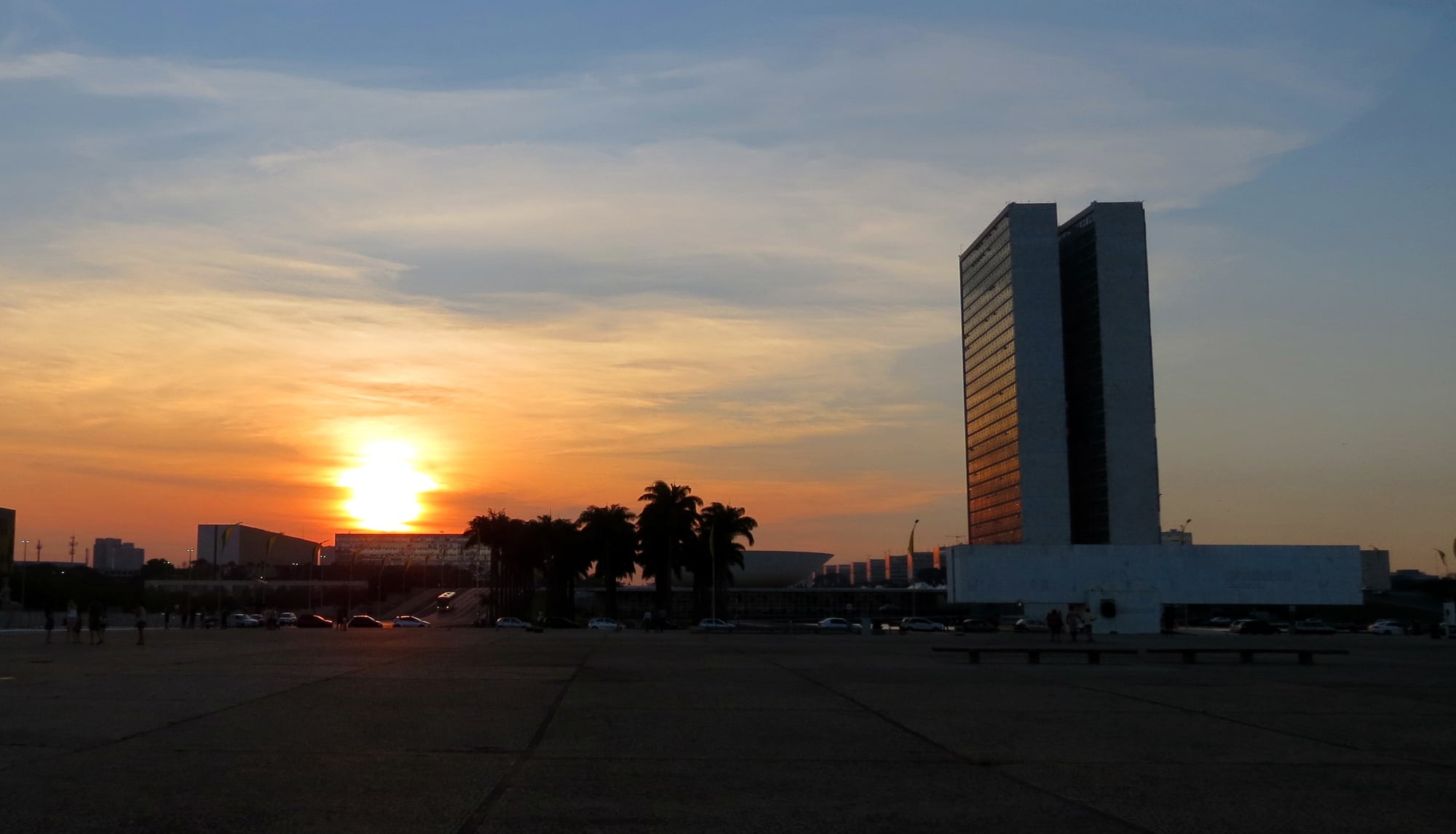
Four days before Brazil’s presidential election, the clearest measure of the next government’s challenge is not found in the polls. It lies in a disagreement over the budget for its first year in office.
The government’s proposal for 2027 anticipates a primary surplus of R$18.6bn. The Senate’s Independent Fiscal Institution, or IFI, has examined the same year and arrived at a deficit of R$86.1bn. Almost R$105bn separates the two estimates.
The difference reflects competing assumptions about growth, revenue and mandatory expenditure. It also captures the argument waiting for whoever takes office in January: whether Brazil can stabilise its debt through economic growth and higher revenue, or whether the next president will have to curb spending more sharply.
Voters have heard little about the measures that either choice would require. President Luiz Inácio Lula da Silva promises to preserve social spending, public investment and the fiscal framework introduced during his current term. Senator Flávio Bolsonaro proposes a tighter rule linked to the level of public debt, alongside administrative reform, privatisations and lower taxes. Both campaigns say that credible fiscal policy will reduce interest rates. Neither has identified the full savings, taxes or programmes needed to deliver it.
The omission has been easier to sustain because the election remains close. A Datafolha survey published on 28 September placed Lula on 40% and Flávio Bolsonaro on 36% in the first round. A prospective runoff remained statistically tied, at 47% to 45%. Other institutes show different numerical leads, generally within their margins of error. The final result therefore remains uncertain.
The campaign will continue to emphasise the contrasts that mobilise each side. The next government will begin with a less ideological problem: making its promises fit a budget that Congress has the power to rewrite.
The official budget starts from the most favourable assumptions
Brazil does not approach this election in an economic crisis. The labour market remains strong, the financial system is well capitalised and the government expects the economy to grow by 2% in 2026. The country finances most of its debt domestically and retains deep capital markets. An abrupt loss of market access remains unlikely.
The cost of that financing has nevertheless become harder to ignore. The Central Bank has kept monetary policy restrictive, while investors demand a substantial premium to hold longer-dated government debt. Companies and households encounter the same conditions through expensive working capital, consumer credit and project finance.
The debt itself continues to rise. The Finance Ministry’s September survey of private forecasters put gross public debt at 83.2% of GDP in 2026 and 87% in 2027. The National Treasury reported federal public debt of R$9.29tn in August. Floating-rate securities now account for 52.74% of federal public debt, leaving the government’s interest bill closely connected to monetary policy.
The 2027 budget rests on an optimistic route through that problem. It assumes 2.5% growth next year and proposes a R$18.6bn primary surplus. After legally permitted exclusions, the result used to assess compliance with the fiscal target would reach R$83.4bn.
The IFI expects growth of 1.8%. It also forecasts higher expenditure on pensions, social benefits, unemployment insurance and court-ordered payments than the government included in its proposal. Its September assessment concludes that the government would need to freeze approximately R$35.7bn of spending even to remain within the permitted range around its target.
Private forecasts fall between the two positions, but closer to the IFI than to the government. The Finance Ministry’s own Prisma Fiscal survey puts the median forecast for next year’s primary deficit at R$45.35bn.
This disagreement does not mean that a crisis will arrive in January. It means the next administration will have little room to combine new spending, lower taxes and rapid debt stabilisation. Campaign promises that appear compatible before the vote will compete for the same resources afterwards.
Neither programme reconciles its promises with the debt path
Lula’s programme defends the present fiscal framework. It proposes to improve the balance through economic growth, more efficient spending, progressive taxation and the removal of tax privileges. It also protects the social programmes, health and education floors, infrastructure investment and industrial policies that define the government’s economic programme.
That approach avoids abrupt spending cuts and protects sectors that depend on public investment or state support. Its credibility depends heavily on revenue. The present administration has already struggled to obtain all the measures required to meet its targets, while Congress has created exceptions and altered tax proposals. Faster growth would help, but the next government cannot set its fiscal policy on the assumption that growth will consistently exceed independent forecasts.
Flávio Bolsonaro’s registered programme rejects the current framework and promises a new rule focused on stabilising and then reducing debt. It calls for primary surpluses, limits on subsidised credit, tighter control of discretionary spending, administrative reform and a renewed privatisation programme. His advisers have also discussed a rule that would impose stronger expenditure restraint when debt crosses specified thresholds.
The plan describes a direction rather than an adjustment. It does not identify which large mandatory programmes would change, how much each measure would save or how quickly Congress would accept them. Discretionary spending represents too small a part of the budget to deliver the promised correction on its own. Administrative reform can produce savings, but many would take years to materialise and would face resistance from affected groups.
Flávio Bolsonaro also promises lower taxes and revisions to the consumption-tax reform that begins its operational transition in 2027. Those commitments could conflict with rapid fiscal consolidation unless spending falls sufficiently to compensate for lost revenue.
Reuters reported that economic advisers in both campaigns are preparing adjustment measures but have avoided discussing the most unpopular choices before the election. That restraint is understandable in a close contest. It leaves voters—and investors—without enough information to judge the distribution or durability of either plan.
Lower interest rates cannot substitute for those decisions. Monetary easing would reduce the debt-service burden over time, but the Central Bank will consider inflation expectations and fiscal policy when deciding how quickly it can proceed. A government that pressures it to move before those conditions improve may instead raise longer-term borrowing costs.
Congress will set the terms of any adjustment
Brazil is not only electing a president on 4 October. Voters will choose all 513 members of the Chamber of Deputies and 54 of the Senate’s 81 members. The composition of those chambers may constrain the next administration more than the presidential margin strengthens it.
Current legislative models point to the PL remaining the largest individual party in the Chamber and to conservative parties retaining substantial influence in the Senate. They do not indicate that either presidential candidate will possess a self-sufficient governing majority. The Chamber is likely to remain divided among the PL, the PT-led federation and several large parties associated with the *Centrão*.
These parties do not form a permanent ideological bloc. They negotiate support around ministries, committee positions, regional spending and parliamentary amendments. Their strength allows them to modify the budget, slow legislation and increase the price of coalition discipline.
A Lula victory would therefore return him to office with a Congress at least as difficult as the present one. Measures that rely on taxing higher incomes, reducing exemptions or preserving the fiscal framework’s revenue assumptions would require negotiation with legislators who have repeatedly diluted comparable proposals. The Senate would also remain a difficult arena for senior appointments and institutional disputes.
A Flávio Bolsonaro victory would give the president a stronger relationship with what may remain the largest party in Congress. It would not produce automatic support for spending cuts. Legislators who favour a tighter fiscal policy in principle may resist changes to pensions, public employment, agricultural support, tax privileges or transfers that benefit their own constituencies.
The Plano Político Chamber model illustrates the problem. It projects the PL as the largest individual party, followed closely by the União Brasil–Progressistas federation, the PT-led federation and Republicanos. Even its central estimates leave the incoming president dependent on several groups. The model remains experimental, but the fragmentation it describes is already a durable feature of Brazilian government.
The contest will not end with a choice between Lula and Flávio Bolsonaro. It will determine which of them has to assemble a majority from much of the same Congress.
Neither candidate is proposing a commercial break with China
The candidates offer clearer contrasts outside fiscal policy. Lula’s programme places strategic autonomy, BRICS and relations with the Global South at the centre of Brazilian diplomacy. Flávio Bolsonaro promises a closer relationship with the United States and greater engagement with the OECD and other Western institutions.
A change of government would alter Brazil’s tone, diplomatic appointments and willingness to support particular international initiatives. It would not remove the economic interests that have constrained previous attempts at ideological alignment.
China bought 30.72% of Brazilian exports during the first eight months of 2026, compared with 9.61% for the United States. Agribusiness, mining and infrastructure interests will continue to protect that relationship under either president.
The two programmes also contain more common ground than their rhetoric suggests. Both seek to attract investment in critical minerals while increasing domestic processing and preventing Brazil from remaining only a supplier of raw materials. They differ over the role of the state and the conditions attached to foreign capital, but neither offers Washington or Beijing unrestricted access.
As Americas Quarterly has argued, projects still depend on Congress, regulators, environmental authorities, state governments and local communities. Political affinity may improve access to the government. It will not allow an overseas partner to bypass Brazil’s legal and federal structure.
The budget fight begins before the winner takes office
Congress is already examining the 2027 proposal. The winner will enter the transition while lawmakers are deciding which revenue assumptions, expenditure provisions and amendments survive. Markets will react first to the result and the economic team, but these negotiations will show whether the new administration can translate campaign policy into an executable budget.
A credible programme will have to identify measures that Congress can pass, show when they affect the primary balance and explain how the government will handle revenue or growth that falls below its assumptions.
Under Lula, the central question will be whether the administration can preserve social and investment priorities while producing savings that do not depend on repeated one-off revenue measures. The answer will emerge through proposed changes to tax benefits, mandatory expenditure and the implementation of the consumption-tax reform.
Under Flávio Bolsonaro, attention will turn to the threshold and enforcement mechanisms in the promised debt-linked rule—and to the programmes selected for restraint. Announcing a stricter framework may initially reduce the risk premium. Failing to secure the votes or identify the savings would reverse that effect.
The composition of Congress, the choice of finance minister, the treatment of Central Bank independence and the first round of budget amendments will provide more reliable evidence than the candidates’ victory speeches. Companies dependent on public contracts, regulated prices, subsidised finance or large infrastructure concessions should also follow the timetable for tax reform and any attempt to change it.
A very close result could produce demonstrations or legal disputes, especially after another polarised campaign. Brazil’s electoral authorities and courts retain the capacity to administer the vote and resolve challenges. Political tension would become economically significant if it delayed the transition, disrupted Congress or prevented the incoming administration from assembling a cabinet and coalition.
The more probable difficulty is less dramatic. Brazil may complete the election without resolving the question that both campaigns have postponed. The next president will then have to explain why lower rates, lower taxes, protected programmes and a falling debt burden cannot all arrive at once.
The campaign ends at the ballot box. The choice over who pays for the next government begins with the budget.
Speak with our analysts
What does this mean for your organization?
If Brazil’s election could affect your investment, financing or operating plans, our analysts can help you assess the policy implications and identify what to monitor after the vote.
Contact our analysts