
Strategic infrastructure · Armed conflict
Myanmar: Dawei’s latest revival runs through a war zone
Moscow has put the deep-sea port back on the official agenda. Its value still depends on a route to Thailand that crosses contested territory, while finance, land rights and sanctions remain unresolved.

Dawei keeps returning to the map
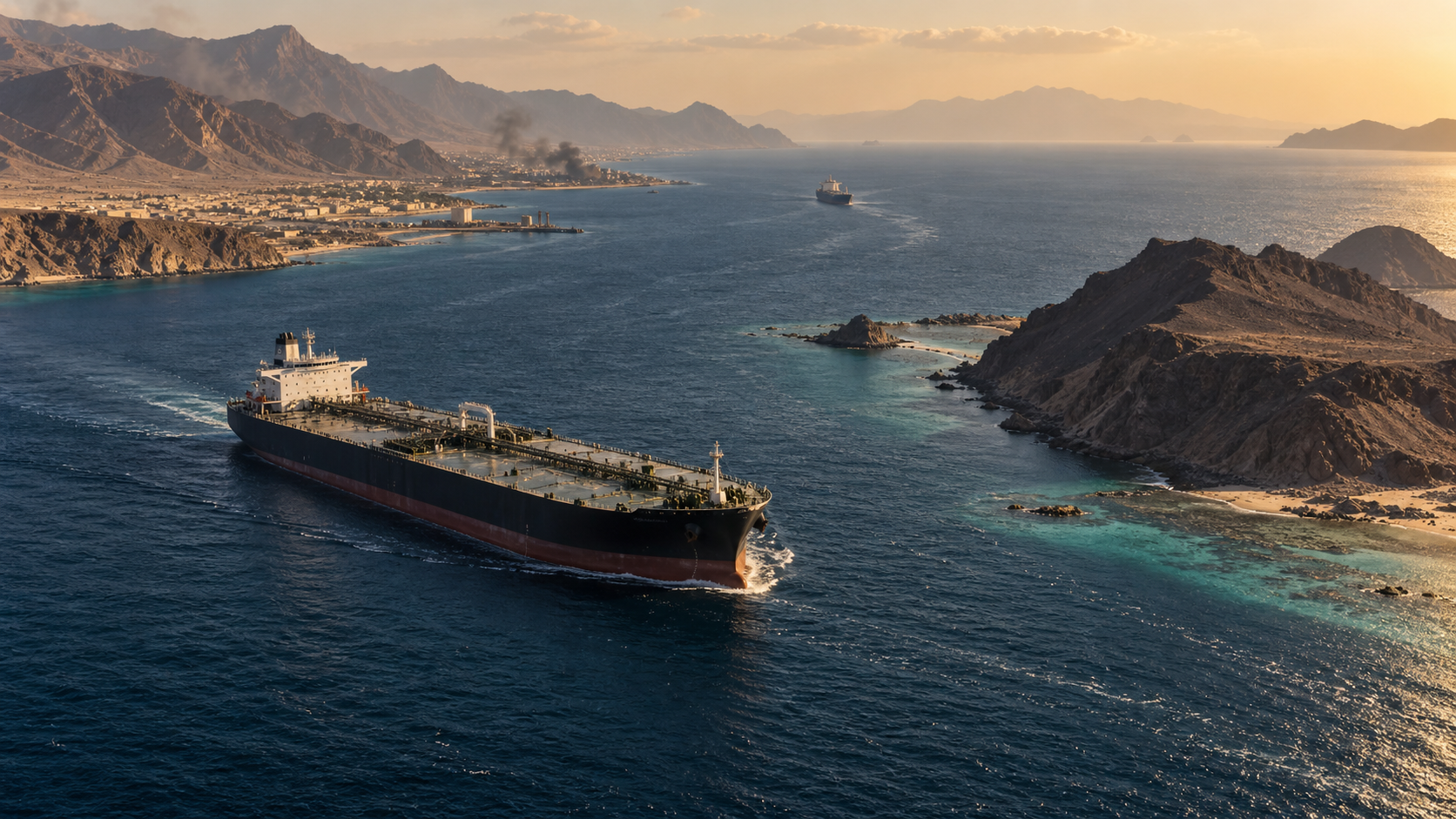
Dawei has spent much of its modern history as a promise on a map. A deep-sea port on Myanmar’s Andaman coast, joined to an industrial zone and an overland route towards Thailand, could give Thai and mainland Southeast Asian industry a more direct outlet to the Indian Ocean. Myanmar officials now say the route could shorten some journeys by four to six days compared with passage through the Strait of Malacca.
Energy infrastructure around the port would add another source of revenue and strategic value.
Thailand and Myanmar first backed that proposition in 2008. Italian-Thai Development received the principal concession in 2010, but the developer’s financing difficulties led the two governments to take the scheme back into a joint vehicle in 2013. Japan joined the shareholding arrangement in 2015 without resolving the project’s underlying problems. The authorities terminated agreements covering nine initial works in January 2021, shortly before the military coup.
A JICA chronology and the later official record show that Dawei has repeatedly won high-level backing without producing a workable way to finance and build the project.
Russia is the latest government to try to revive it. A February 2025 memorandum covered investment cooperation in Dawei and the surrounding area. In July 2026, Myanmar’s commerce ministry said it was working with a new developer and was close to formally defining the port limits, after terminating its agreement with Italian-Thai Development in 2020.
The announcement confirmed that officials continue preparatory work, but identified no committed financing, construction timetable or replacement structure for the full project.
Russian involvement gives Myanmar’s authorities diplomatic backing and offers Moscow a possible foothold on the Indian Ocean. But it does not solve the problems that defeated earlier attempts to build Dawei. The port derives much of its value from a reliable connection to Thailand, while every component requires finance and coordinated operation.
A smaller port or energy project is therefore more plausible in the near term than the full corridor presented in official plans.
The route to Thailand crosses a war zone
In August, Reuters reported that the military had deployed hundreds of troops around the proposed project area. Resistance fighters and a local activist described villages being burned and linked the operation to an attempt to secure the corridor; ACLED said a column of about 700 soldiers had advanced into surrounding areas. Reuters could not independently confirm the reported abuses, and neither the government nor the Russian embassy responded to its questions.
The reporting nevertheless places the revival in its essential setting: Dawei’s approaches cross an active theatre where authority is divided and can change by force.
A port is particularly vulnerable to this kind of fragmentation. Control of the waterfront offers little certainty if roads are cut, power is unreliable or workers cannot travel safely. Construction would depend on roads, power, workers and suppliers spread well beyond any area the military can protect continuously. Even a relatively secure port could remain commercially weak if the connection to Thailand is intermittent.
Military operations intended to clear that route may also deepen local resistance to the project. Communities that associate Dawei with displacement, coercive land acquisition or greater military control are unlikely to see the infrastructure as neutral. Grievances created before construction begins can persist for years, affecting access, security and the willingness of outside partners to participate.
Russian backing increases Dawei’s political importance, but may also make it a more prominent target for armed opponents. It will also attract greater scrutiny from governments considering further restrictions on Myanmar’s military authorities and their sources of external support.
Russian backing does not solve Dawei’s old problems
Sanctions risk will extend well beyond the lead developer. The project would bring together state bodies, landholders, military-linked enterprises, banks, insurers, shipping companies, engineering contractors and suppliers of equipment that may have both civilian and military uses.
Ownership and control can already be difficult to establish. Conflict makes records less reliable and site visits more dangerous at precisely the point when companies need greater scrutiny.
The legal position varies from one jurisdiction to another. A participant that is not directly prohibited from entering a contract may still be unable to find a bank willing to process payments, an insurer willing to cover the works or a manufacturer willing to supply a sensitive component. Changes in beneficial ownership or the use of intermediaries can create problems after a contract has been signed.
In practice, the commercial perimeter around sanctions is often wider than the letter of any single regulation.
Official statements reveal what the authorities want to do and how they want the project to be understood; they do not establish feasibility or local consent. Community and opposition reporting can expose conditions omitted by official sources, but accounts of battlefield events may remain partial or difficult to corroborate.
A credible assessment therefore has to distinguish between what each source can establish rather than treating all reporting as equally reliable.
Any revival is likely to begin on a smaller scale
Russia and Myanmar may move ahead with a smaller energy facility, a limited port component or preparatory works while the wider special economic zone remains dormant. That is the most plausible form of near-term progress because both governments can point to visible activity without first solving the financing and security problems of the entire project.
Smaller projects could create real opportunities, but companies should not value them on the assumption that the entire Dawei corridor will eventually be completed. A terminal without a dependable road link, or a road without sufficient port capacity, cannot provide the service promised by the system in official plans. Logistics companies should assess each component on its own economics.
Energy firms should separate upstream, power, refining and export proposals, which involve different counterparties and sanctions implications even when announced as one package.
Lenders, insurers and equipment suppliers will need to assess the project well before any formal tender. The decisive questions concern the sponsors and guarantees, the route of funds, state and military involvement, the origin of land rights and the eventual use of equipment. Contractual protections offer limited comfort if payments cannot move or if access to the site disappears.
Named sponsors, committed finance, realistic phasing, revenue assumptions and the terms of any state guarantee would materially strengthen the commercial case. So would reliable access along the full route, rather than a temporary military presence at selected sites. Transparent compensation, an independent grievance process and credible human-rights due diligence would begin to address the legacy of contested land.
The project also needs banking, insurance and supply arrangements that work across all relevant jurisdictions.
The military could accelerate construction if it consolidates the approaches and secures a lead investor, but doing so would increase the danger of abuses and retaliatory attacks. Delegations and agreements may instead continue without substantial construction, repeating Dawei’s familiar pattern of political attention and commercial delay.
For companies in Thailand and the wider region, Dawei belongs in long-term planning but not yet in a base-case forecast. Its strategic appeal explains why governments keep returning to it. Turning that appeal into a viable corridor would require committed financing, local consent and reliable access through contested territory.
Until then, Dawei remains a collection of possible projects rather than a dependable new trade route.
Speak with our analysts
What does this mean for your organization?
If the Dawei project or the wider situation in Myanmar could affect your plans, our analysts can help you interpret the changes and decide what to monitor next.
Contact our analysts