
Air defence · Armed conflict
The drone war no longer stops at Ukraine’s borders
Russia’s air war against Ukraine is causing more frequent disruption across the border. Some incursions may be accidental, but the flight path of a Geran drone on 8 September suggests that Moscow may also be testing Romanian and Moldovan defences.
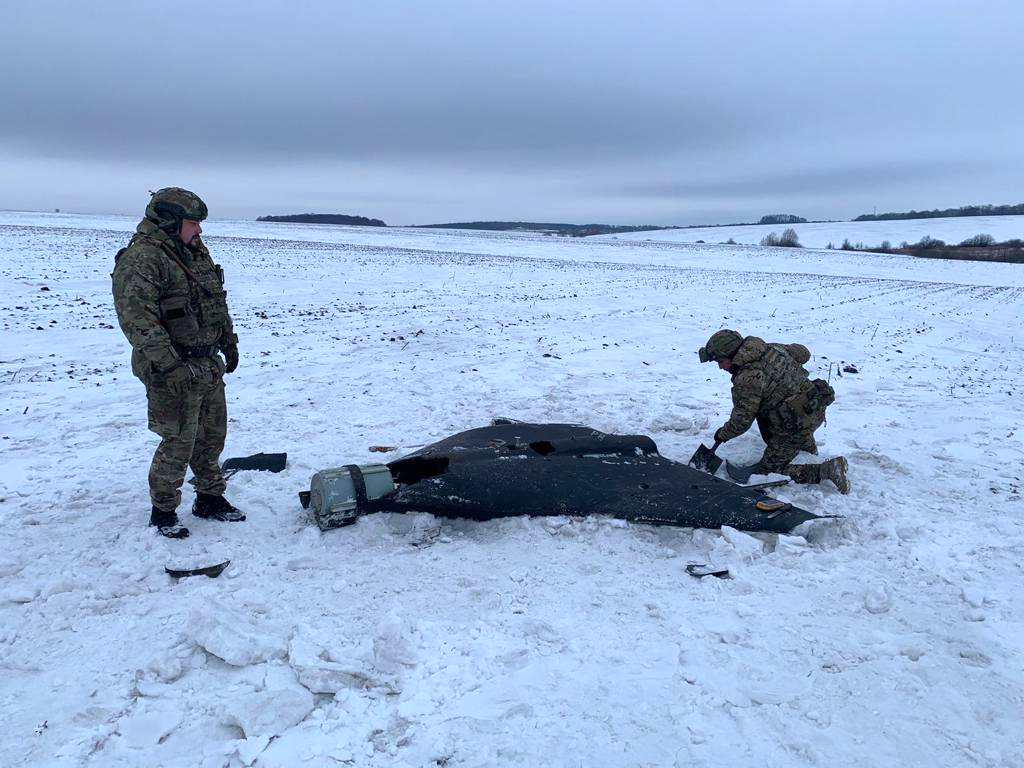
Russian drones have become a regular presence over Moldova and eastern Romania. The two countries recorded about three dozen incidents from the beginning of August to 8 September. Seventeen drones crashed in Moldova in August, the same number as in all of 2025. Romania recorded 26 incursions by 8 September, compared with nine last year. Most passed without casualties, but several damaged buildings, started fires or forced authorities to close airspace and border crossings.
One such closure drew international attention on 8 September. Moldova suspended civilian flights from Chișinău while a Russian drone crossed the country. Three departures were delayed, including the flight carrying Ukrainian President Volodymyr Zelenskyy to Norway. There is no evidence that the drone was targeting his aircraft. The episode nonetheless showed how Russian drone operations against Ukraine can disrupt both commercial aviation and senior-level travel beyond the immediate target area.
The drone had followed an unusual course. It entered Moldova from Ukraine, flew west past Chișinău and crossed into Romania near Iași. Romanian radar tracked it through several inland counties before losing contact close to the northern border. Six minutes later, Moldova detected it again. It eventually exploded in a field near Mihăileni Vechi, about 25 kilometres from Romania. Moldovan investigators identified features associated with a Geran attack drone.
In less than an hour, the drone crossed three countries with very different capabilities to respond. Ukraine was defending itself against the wider Russian attack. Romania scrambled NATO aircraft. Moldova could only suspend civilian flights and track the drone.
The attacks have moved from ports to border crossings
The incursions reflect a broader change in Russia’s air campaign. Moscow has intensified attacks on ports, roads and border posts in southern Ukraine as Kyiv relies more heavily on connections through Romania and Moldova. Earlier incidents largely followed strikes on the Danube ports of Izmail and Reni, where Ukrainian and Romanian territory are separated by only a few hundred metres of river.
The disruption has since spread along the border. On 20 August, an explosion near Ukraine’s Giurgiulești crossing started a fire that reached Moldovan territory; police later found a crater and drone fragments nearby. Moldova closed the Mirnoe crossing after Russian strikes the following day and suspended traffic at Vulcănești on 25 August when a Shahed drone hit the Ukrainian side.
The 8 September flight extended the problem north and further inland. At 16:33, Romanian radars detected the aircraft west of Chișinău. It entered Romania four minutes later, about 30 kilometres south-east of Iași. Two Spanish F-18s deployed on NATO’s air-policing mission took off at 16:39. The drone continued north through Neamț, Suceava and Botoșani counties before returning to Moldova without being intercepted.
That night, Russian drones struck the Ukrainian side of the Tudora-Starokozache crossing, about one kilometre from Moldova. Two civilians were killed and two injured. Moscow said it had targeted logistics used to move weapons into Ukraine, an allegation Moldova denies. Russia was no longer striking only near the border; it was targeting the crossings themselves.
The 8 September flight raises doubts about accidental spillover
Technical failure or electronic interference may have altered the drone’s course. Public evidence does not show how its flight was programmed, and the Institute for the Study of War has said it cannot determine whether this particular incursion was intentional. Its path was nevertheless difficult to reconcile with the usual spillover from attacks on Ukraine. The drone approached Romania from central Moldova, travelled well beyond the Danube corridor and then turned back.
The broader pattern is consistent with a combination of accidental spillover and deliberate incursions into neighbouring airspace. Even an unintended crossing can reveal where radars detect a target, how quickly NATO aircraft respond and under what circumstances commanders are prepared to fire. It can also force governments to close airports, issue public warnings and scramble aircraft that are far more expensive to operate than the drone they are pursuing.
Russia can learn from these responses and force expensive countermeasures without admitting that an incursion was deliberate.
Romania can shoot drones down, but interception remains difficult
Romania has taken a firmer position since a Russian drone struck an apartment building in Galați in May, injuring two people. Legislation adopted in 2025 allows Romanian and allied forces to destroy an unauthorised drone if it cannot otherwise be diverted or neutralised. Romanian F-16s shot down three drones in three days in July, marking a clear break with the more cautious approach taken during earlier incursions.
The Spanish aircraft did not fire on 8 September. The Romanian defence ministry has published the flight chronology but has not explained why no interception took place. The drone was already over Romania when the fighters took off and later crossed populated inland areas. The crews may not have had a safe opportunity to fire, but there is not enough public information to determine why they did not engage.
Fighter aircraft provide range and speed, but they are an expensive answer to a relatively cheap weapon. Romania has acquired the MEROPS counter-drone system and is strengthening surveillance along the Black Sea and Danube. Sustained incursions would increase the need for short-range interceptors and electronic-warfare systems. Without them, each incursion can force Romania to scramble expensive fighter aircraft even when the drone poses no immediate threat to a military target.
Moldova can see the threat before it can stop it
Moldova tracked the 8 September drone and closed civilian airspace, but it could not stop the aircraft. The country has improved surveillance since the first Russian missiles and drones crossed its territory, including through the purchase of a French radar. Its small number of Piorun missiles and other short-range systems can protect selected sites, but not the country as a whole.
The EU approved €20m for short-range air-defence equipment in 2025 and a further €120m for a medium-range system in July 2026. These decisions should strengthen Moldova’s defences, but procurement, training and integration are likely to take several years. Until those systems are operational, Moldova will continue to rely largely on warnings from Ukraine and Romania, temporary airspace closures and emergency crews searching for wreckage.
Repeated incursions are also feeding Moldova’s domestic debate over security and neutrality. The government argues that neutrality cannot protect the country from Russian drones and missiles entering its airspace during attacks on Ukraine. Pro-Russian parties present closer security ties with the EU as an abandonment of neutrality. Neither argument is new, but the growing frequency of drone incidents is giving the issue greater political urgency.
Any fatality caused by a drone inside Moldova would sharply increase pressure on the government to accelerate defence procurement. A slow or confused response could also damage public confidence.
Giurgiulești, Moldova’s only port, requires particular attention. Russia has accused Moldova and Romania of using the port to supply weapons to Ukraine. Chișinău rejects the claim, but similar Russian allegations have preceded attacks on Ukrainian transport infrastructure. A direct strike on Moldovan territory remains unlikely, as it would strengthen support for European security assistance and damage Moscow’s political allies in the country.
Attacks on nearby Ukrainian roads, ports and border posts are much more likely and could still interrupt operations at Giurgiulești.
Russia can disrupt both countries without openly attacking them
Russian drones are likely to enter Romanian and Moldovan airspace again over the next six months. Russia is also likely to continue attacking Ukrainian transport and energy infrastructure near both borders. Some aircraft may cross because of technical failures or electronic warfare; others may be sent to test detection and interception. Even after a drone is recovered, investigators may be unable to determine whether the crossing was accidental or deliberate.
Russia is unlikely to carry out an overt strike on Romania, because the military gain would not justify the risk of confrontation with NATO. It has less reason for restraint around Moldova, which is not covered by NATO’s collective-defence guarantee, but a direct strike would still carry diplomatic and political costs. Russia can instead disrupt both countries and learn about their defences while avoiding the risks that would come with an overt attack.
Repeated flights through northern or central Romania would indicate that Russia is moving beyond the established Danube corridor. Flights near Chișinău airport, Giurgiulești or major energy facilities would be more concerning than drones that briefly cross remote border areas. Further attacks on Ukrainian crossings with Moldova and Romania would also point to a sustained campaign against land connections that have become more important as Black Sea trade has come under pressure.
Companies operating in the region should prepare for airspace closures, delayed flights and temporary restrictions at border crossings. Ports, logistics centres and energy sites near Ukraine should maintain procedures for warning staff and suspending outdoor work during an alert. Any resulting disruption would probably remain local and short-lived, but could occur with little notice.
Romania and Moldova are no longer dealing with rare spillover from the war in Ukraine. Repeated drone incursions have become a recurring security problem, with uncertainty over the purpose of each flight working to Russia’s advantage. Both governments must now prepare for incidents that may be accidental, deliberate or impossible to classify with confidence.
Speak with our analysts
What does this mean for your organization?
If events on Europe’s eastern frontier could affect your people, operations or plans, our analysts can help you assess the implications and identify the signals that matter.
Contact our analysts