
Elections · Political stability · Fiscal policy · International relations
Brazil returns Lula to office as Congress moves further right
Lula overturned a first-round defeat to win 51.79% of the vote. Flávio Bolsonaro has challenged the result, while the PL’s advance in Congress leaves the president dependent on conservative parties to pass a budget and pursue much of his domestic programme.
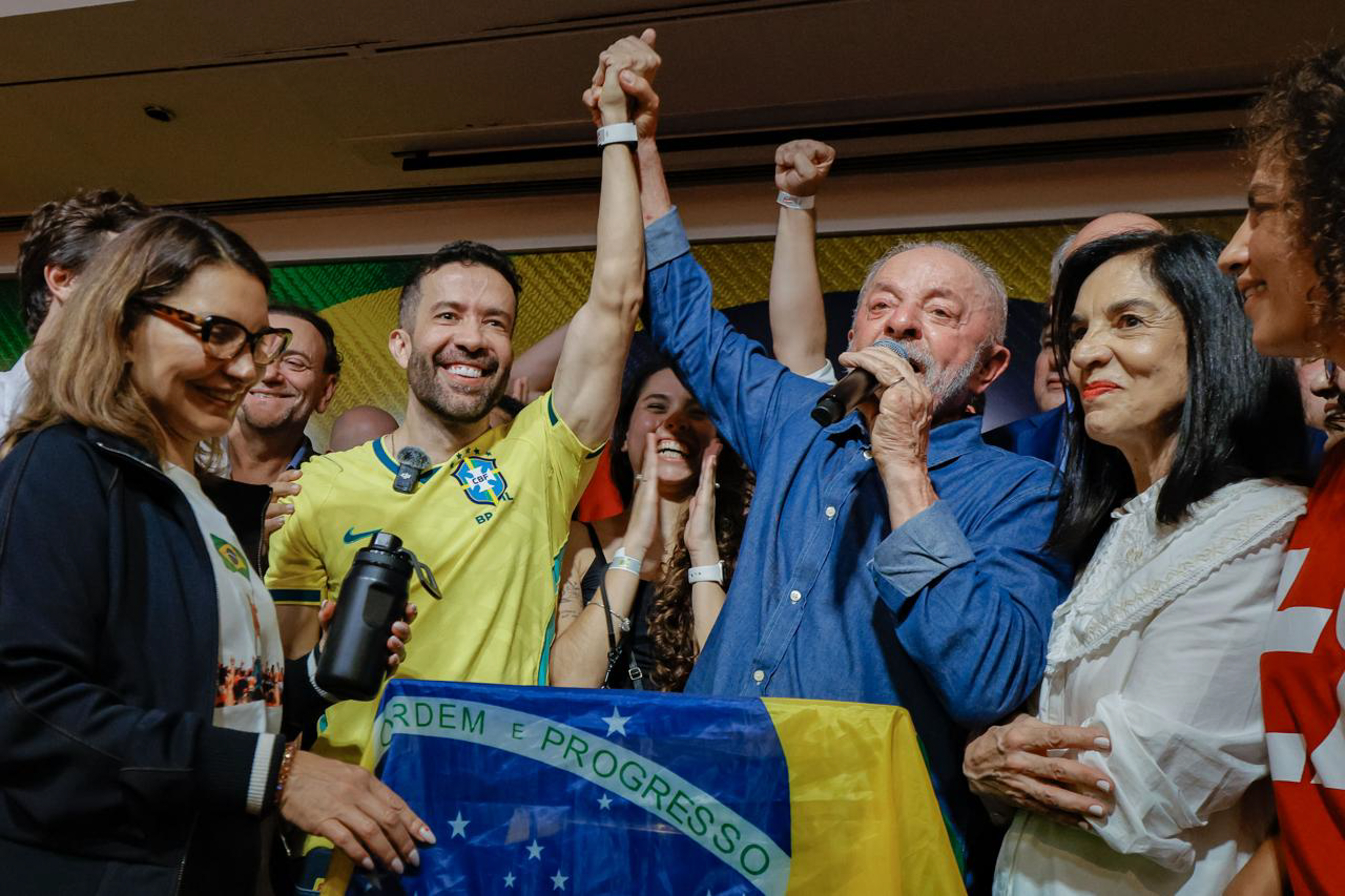
Shortly after midnight, Kassio Nunes Marques announced that Luiz Inácio Lula da Silva had been re-elected president of Brazil. Nunes Marques presides over the electoral court. Jair Bolsonaro appointed him to the Supreme Court in 2020.
Lula received 64,256,232 votes, or 51.79% of the valid total. Flávio Bolsonaro finished 4.4m votes behind, on 48.21%. Turnout rose to 80.78%, almost two percentage points higher than in the first round.
The result overturned the assumptions that had formed since 4 October. Bolsonaro had led the opening vote by more than 2.2m ballots. Brazilian assets rallied, prospective ministers began circulating in Brasília and the Bolsonaro family appeared close to returning to the presidency.
Lula recovered through higher turnout and large majorities in the north and north-east. He became the first candidate since Brazil restored direct presidential elections in 1989 to win a runoff after placing second in the first round.
Bolsonaro did not concede. He demanded that the election be annulled because Supreme Court justice Cristiano Zanin had extended voting by two hours. The order came minutes before polls were due to close, following reports of public transport failures in São Paulo and Salvador and heavy rain in the south. Both campaigns had requested more time, although for different regions.
Nunes Marques said the extension had not affected the count. The Superior Electoral Court declared Lula elected.
The presidential vote gave Lula another four years in office. The congressional vote gave the Bolsonaro movement its strongest legislative position to date. Brazil enters the new term with continuity at the Planalto Palace and a sharper contest over what the president can do from it.
Bolsonaro has challenged a result certified by his father’s appointee
The decision to extend voting hours was unusual. It was also applied unevenly: some polling stations remained open, while others closed close to the original deadline. The electoral authorities will have to account for those differences.
Bolsonaro’s demand goes much further. Annulment would require evidence that the extension prevented a free vote or gave Lula an advantage large enough to change the national result. Nothing made public so far approaches that threshold. Bolsonaro’s own campaign had requested an extension in southern states where heavy rain complicated access to polling stations.
The identity of the official who certified the result further weakens the political argument that Lula’s allies controlled the process. Nunes Marques joined the Supreme Court under Jair Bolsonaro and assumed the presidency of the electoral court before this campaign.
A court can dispose of a weak petition. It cannot compel a losing candidate to recognise the authority of the winner.
Flávio Bolsonaro’s refusal gives the PL a grievance around which to organise after an unexpected defeat. It also connects the 2026 result to the campaign his father waged against Brazil’s voting system four years earlier.
After Jair Bolsonaro lost the 2022 election, supporters camped outside military installations and called for intervention. On 8 January 2023, crowds invaded Congress, the Supreme Court and the presidential palace. Investigators later established that senior political and military figures had considered ways to prevent the transfer of power. Jair Bolsonaro is now serving a prison sentence for the attempted coup.
Brazilian institutions enter the present dispute with that experience behind them. The courts have prosecuted participants in the previous attempt, electoral procedures have undergone repeated scrutiny and the military has fewer opportunities to present itself as an arbiter between the candidates.
Much now depends on whether the PL treats the complaint as a legal case or the beginning of a campaign against Lula’s legitimacy. Several of its incoming senators built their campaigns around opposition to the Supreme Court. A contested presidential result gives them another reason to target the judiciary through hearings, investigations and confirmation votes.
The response outside the party will be equally important. Governors, congressional leaders and business organisations can deny an electoral challenge wider institutional support even while opposing Lula’s programme. Large demonstrations would create a different opening, particularly if political leaders encouraged them after the courts had ruled.
The available evidence points towards a failed legal challenge rather than a reversal of the vote. It offers less reassurance about the language in which the opposition will conduct the next four years.
Congress moved right even as Lula recovered
The PL elected 121 of the 513 members of the Chamber of Deputies, 24 more than in 2022. Lula’s PT won 70 seats; with the Communist Party and Greens, its federation will hold 88. The PL now has the largest group, although it remains well short of the 257 votes required for an absolute majority.
The change in the Senate is more pronounced. After accounting for the gubernatorial elections and the substitutes who will fill the resulting vacancies, the PL is expected to begin 2027 with 29 of the 81 senators. The PT will have ten. No party has entered a legislative term with a Senate group this large since the 1988 constitution took effect.
The PL cannot command either chamber on its own. Lula must still negotiate with the parties that have sustained successive Brazilian governments: União Brasil, Progressistas, the PSD, Republicanos and the MDB.
These parties are often grouped under the label *Centrão*, but they do not constitute a settled coalition. Their legislators bargain separately over ministries, committee positions, regional spending and parliamentary amendments. They may support the government on a tax measure, join the PL on environmental regulation and divide again over appointments or public security.
Lula managed this system during his third term. His government secured tax reform and other legislation by sharing control of ministries and accepting greater congressional influence over the budget. The election has made those arrangements more expensive.
The PL can now organise conservative resistance around issues that resonate beyond its own benches: crime, firearms, abortion, indigenous land, environmental enforcement and the powers of the Supreme Court. Centrist parties can choose between that opposition and a government that needs their votes.
Control of the two chambers will matter almost as much as their party composition. The Chamber president decides whether impeachment petitions against the head of state advance. The Senate president exercises comparable authority over proceedings involving Supreme Court justices. Both influence the timetable for legislation and the composition of important committees.
The PL’s 29 senators cannot remove a Supreme Court justice; conviction requires 54 votes. Its caucus is large enough to disrupt nominations, dominate hearings and force other parties to take positions on institutional disputes they might prefer to avoid.
Lula will still find majorities for measures that distribute investment or respond to strong sectoral interests. The harder negotiations will concern policies that remove tax privileges, constrain parliamentary spending or impose costs on agriculture, mining and regulated industries.
For companies, the uncertainty lies less in whether Congress functions than in what emerges from its bargaining. Tax implementation, concessions, environmental licensing and infrastructure expenditure may advance on different terms from those initially presented by the government.
The argument over R$105bn now moves into Congress
The government submitted a 2027 budget that anticipates a primary surplus of R$18.6bn. The Senate’s Independent Fiscal Institution, or IFI, examined the same year and projected a deficit of R$86.1bn.
The difference of almost R$105bn reflects competing assumptions about growth, revenue, pensions, social benefits and court-ordered payments. Lula’s re-election preserves the fiscal framework under which the official estimate was prepared. It does not make its assumptions more likely.
During the runoff, the government announced additional support for students, small businesses and household purchasing power. The measures helped Lula recover from his first-round defeat. They now have to fit into a budget already dependent on favourable revenue forecasts.
Economic growth is slowing. The Central Bank expects GDP to expand by 1.4% in 2027, down from an estimated 1.8% this year. Inflation expectations remain above the 3% target, while the Selic rate stood at 13.75% in September. Public debt exceeds 82% of GDP.
High interest rates affect the government through the cost of financing that debt and the private sector through working capital, consumer borrowing and project finance. They also reduce the room for the Central Bank to respond to weaker growth.
Brazil finances most of its debt in reais and holds substantial foreign-exchange reserves. Its domestic capital markets are deep and its banks well capitalised. The pressure is therefore likely to arrive through the currency, bond yields and the cost of credit rather than a sudden loss of access to financing.
Markets had moved substantially in the other direction before the runoff. Brazilian equities gained almost 7% after Bolsonaro led the first round, while the real strengthened by roughly 5%. Investors expected a new government to introduce tighter fiscal rules, reduce the role of the state and revive privatisations.
The reversal after Lula’s victory reflects the distance between those expectations and the programme voters retained. Its duration will depend on who leads the Finance Ministry, how the government treats its runoff commitments and whether the revised budget offers a credible route towards stabilising debt.
Congress sits on both sides of that calculation. Legislators can block tax increases and attempts to reduce exemptions while adding amendments and expenditure for their constituencies. Lula needs many of the same parties to protect his government against an organised opposition.
The negotiations over the budget will consequently define more than the fiscal target. They will establish the price of the coalition on which Lula’s fourth term depends.
Companies reliant on domestic credit, public procurement, regulated prices or infrastructure concessions will see the effects at different points. Higher yields affect financing immediately. Delays to the budget can slow procurement and payments. Bargaining over revenue may reopen sectoral taxes and exemptions that appeared settled during the campaign.
The first credible account of Lula’s economic programme will come from the revised figures presented to Congress, not from the victory speech.
Trump’s tariffs strengthened Lula’s argument at home
A Bolsonaro presidency would have moved Brazil closer to Washington on regional security, China and the treatment of critical minerals. Lula’s victory preserves the largest obstacle to President Donald Trump’s attempt to build a more closely aligned group of governments across Latin America.
US policy became part of Brazil’s election well before the runoff. Washington imposed additional tariffs on Brazilian goods while criticising the prosecution of Jair Bolsonaro. It pressed Brasília to join US-led security initiatives against organised crime and sought preferential access to Brazilian deposits of rare earths and other strategic minerals.
Lula placed these demands inside a wider argument about sovereignty. In his victory speech, he declared that Brazil would not accept becoming anyone’s “backyard”. The tariffs allowed his campaign to connect the defence of Brazilian exporters with resistance to foreign involvement in the country’s courts and elections.
They did not produce the political outcome Washington wanted. By associating Flávio Bolsonaro with external pressure, they may have helped Lula recover among voters who do not otherwise share his economic or social programme.
Trade and investment give both governments reasons to contain the dispute. The United States wants mineral supplies that reduce its dependence on China. Brazil wants capital, processing technology and relief from tariffs. Lula visited Washington in May and has already negotiated with Trump without joining his wider regional agenda.
The most sensitive discussions will concern critical minerals. Brazil holds some of the world’s largest rare-earth reserves and produces most of the global supply of niobium. The government wants to attract foreign investment while retaining domestic processing and the ability to sell to several markets.
Brasília has tightened its scrutiny of the sector since the acquisition of the Serra Verde rare-earth operation by a company in which the US government holds an interest. American projects offering local processing, technology transfer and credible environmental commitments may proceed. Proposals that imply exclusive access or limit Brazil’s commercial options will face greater resistance.
China remains Brazil’s largest trading partner and the principal buyer of its agricultural and mineral exports. Relations with Beijing, participation in BRICS and engagement with the Global South will continue to give Brazil alternatives when negotiations with Washington become difficult.
Lula is unlikely to reserve projects for Chinese companies merely to make that point. Competition among American, Chinese, European and Gulf investors strengthens Brazil’s position, particularly where several partners can provide comparable financing and technology.
Europe offers a less adversarial relationship. The interim EU–Mercosur trade agreement has applied provisionally since May, while the wider agreement moves through ratification. European support will remain linked partly to deforestation and Brazilian environmental enforcement. Delivering on those issues has become harder now that agricultural and mining interests hold more influence in Congress.
The regional setting has also changed since Lula began his third term. Conservative presidents govern several of South America’s largest countries, leaving Brasília with fewer ideological partners. Brazil’s scale will sustain cooperation on trade, energy and infrastructure, but common positions on Washington, security and Venezuela will prove more difficult.
Lula has secured another term for Brazil’s policy of strategic autonomy. The disputes over tariffs, security cooperation and critical minerals will determine how costly that autonomy becomes.
Lula’s fourth term opens the race to succeed him
Lula will turn 81 two days after the election and has described this campaign as his last. The Brazilian left has retained the presidency without choosing who can lead it afterwards.
Fernando Haddad remains one of the PT’s best-known national figures, despite repeated electoral defeats. Several governors and senior party members control strong regional organisations without Lula’s national reach. Vice-President Geraldo Alckmin offers continuity and appeal beyond the left, but comes from outside the PT.
The first cabinet reshuffle will begin to order that field. A senior ministry offers access to investment decisions, national media and the administrative record from which a 2030 campaign can be built. Appointments made to govern the next four years will also determine who is able to compete when they end.
The right faces its own choice. Flávio Bolsonaro lost the presidency but attracted almost 60m votes, and the PL now dominates the congressional opposition. The Bolsonaro family remains capable of mobilising a national electorate. Conservative governors may offer similar policies without the family’s conflicts with the judiciary and the legacy of the 2022 coup attempt.
Both succession contests will begin before Lula completes the more difficult parts of his programme. Ministers and legislators may start positioning themselves for 2030 while the government is still negotiating fiscal measures, public-security policy and industrial investment.
The first months provide a more immediate test. Bolsonaro must decide how far to carry his challenge to the vote. Congress will choose leaders who can either manage or intensify the confrontation between the PL and the courts. Lula must appoint an economic team and revise a budget whose revenue assumptions remain disputed.
By February, when the new Congress takes office and begins rewriting that budget, Brazil should have a clearer view of whether Lula’s fourth term will resemble the difficult coalition government of the past four years—or open a more sustained confrontation among the presidency, Congress and the judiciary.
Speak with our analysts
What does this mean for your organization?
Speak with our analysts to discuss how these developments may affect your organization. Whether you are considering an immediate decision or need a clearer view of what may come next, we can provide additional context and a closer assessment of the issues most relevant to you.
Contact our analysts