
Political stability · Armed conflict
Niger: The mutiny that brought the front line to Niamey
Tiani’s presidential guard and Russian personnel stopped the 29 August coup attempt. Their success gives Niger’s leader time, but the revolt exposed discontent in frontline units and a growing tension between protecting the regime and fighting the insurgency.
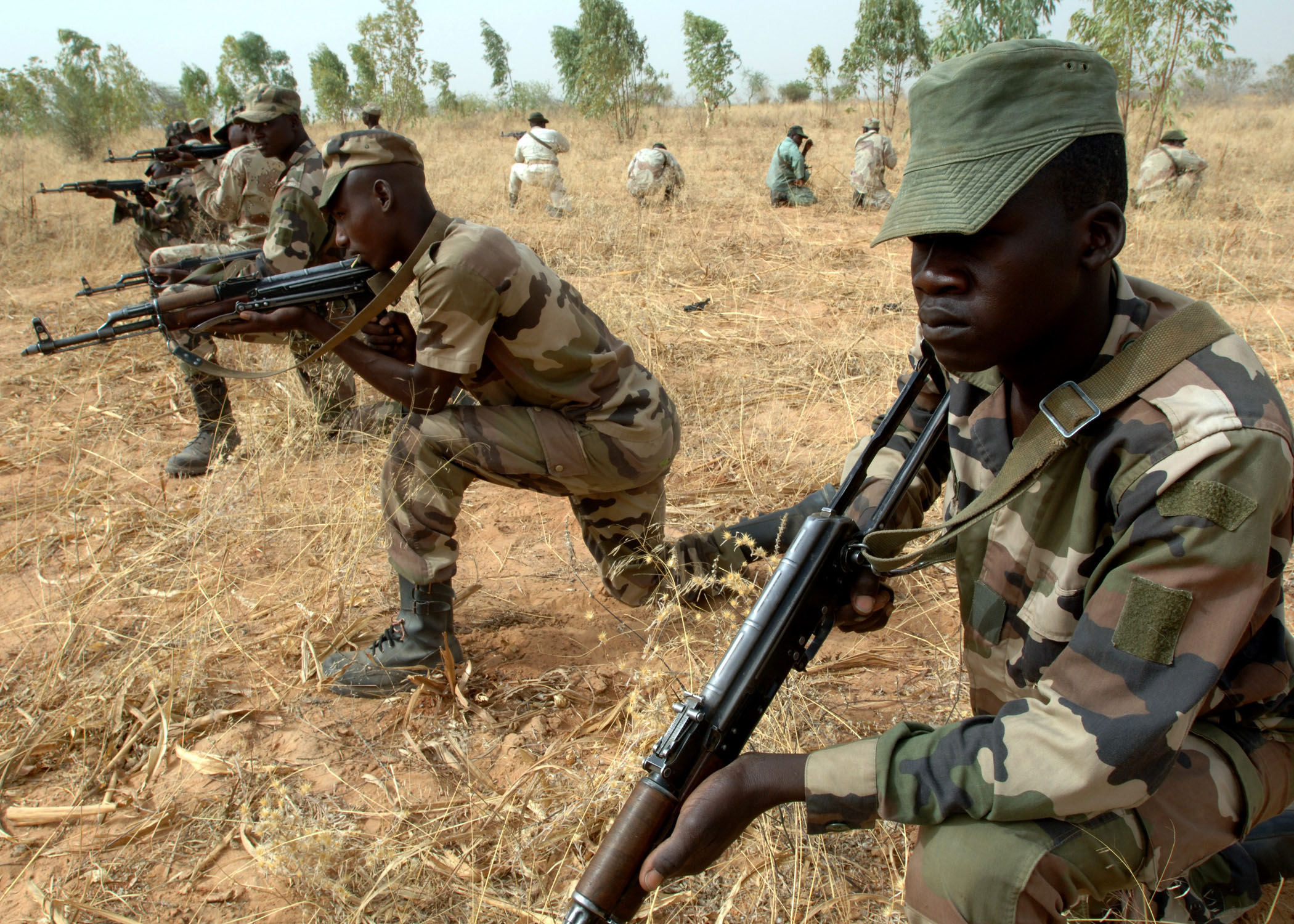
Shortly after midnight on 29 August, soldiers seized Air Base 101 inside Niamey’s international airport complex, detained fellow servicemen and opened fire on sites across the capital. Others moved towards the presidential palace and interrupted the state broadcaster. Forces loyal to General Abdourahamane Tiani recovered the airport and the centre of government within hours. Three members of the presidential guard died in the fighting; the number of mutineers killed or detained remains contested.
The targets provide more evidence about the operation than the mutineers themselves have. They issued no communiqué, named no alternative leader and gave no public account of their motives. The revolt began inside the military chain of command, but attacks on the presidency, the state broadcaster and the country’s principal air base gave it the character of a coup attempt. Niger’s defence ministry called it a mutiny. The AES condemned it as a betrayal.
Neither description explains who organised the revolt or how far support extended beyond the units that fought in Niamey.
The failed takeover does not mean that Tiani is close to losing power. It does, however, show that his control depends heavily on a loyal presidential guard rather than uniform support across the security forces. Soldiers from units fighting jihadist groups in western Niger have now carried their grievances into the capital. That threat is different from the insurgency itself, but it grew out of the same deteriorating war.
The regime survived where it began
The contrast with July 2023 matters. Tiani then commanded the presidential guard that detained President Mohamed Bazoum and initiated the coup. The wider army backed the takeover the following day, arguing that confrontation among the security forces risked bloodshed. The IISS account of the 2023 coup describes how an action by one elite unit became a change of government once the rest of the military accepted it.
In August 2026, the same presidential guard protected Tiani. The mutineers controlled a strategically important base for several hours but could not break the unit at the centre of his rule. No senior commander publicly joined them, and attempts to rally other forces failed to produce a broader takeover. The government therefore retains the ability to defeat a direct challenge in Niamey.
That tells us less about the wider army. EIU reporting indicates that one battalion declined to storm Base 101 and that some senior officers avoided taking sides. The gendarmerie and national guard issued public denials of involvement, suggesting that every part of the security apparatus faced pressure to make its position clear. Neither refusal nor hesitation amounted to joining the revolt, but both suggest that Tiani cannot assume the same level of obedience across the force.
Tiani restored control without demonstrating that this loyalty extends much beyond the forces that defended him. His response will determine whether that gap narrows or becomes more dangerous.
The government has instead focused publicly on alleged foreign involvement. It accused France, ECOWAS and several West African states of helping to organise the revolt but presented no public evidence. France and Benin rejected the allegation. The accusations follow a familiar argument that hostile foreign powers, rather than the government’s own security record, are driving instability in Niger.
That narrative may rally supporters and justify tighter controls. It does not address the grievances reported among deployed soldiers.
Frontline frustration reached the capital
Available reporting links younger officers, rank-and-file soldiers and members of special-forces units to the revolt. Many had served in Dosso, Ouallam, Tillabéri and Téra, where ISSP and JNIM have inflicted heavy losses. Complaints about equipment, rotations and preferential treatment for the presidential guard were already circulating before the events in Niamey.
In 2025, soldiers at Termit detained visiting senior officers during a dispute over conditions and support, while another junior officer publicly challenged the conduct of the war.
The mutineers have issued no statement explaining their motives. Financial Times reporting points both to frustration among lower ranks over battlefield losses and to disagreements among senior officers over Niger’s foreign partnerships. Several grievances may have converged in the same operation. A subsequent purge could therefore settle disputes over policy and command as well as punish those who took up arms.
The involvement of frontline personnel strikes at the justification Tiani gave for taking power. The 2023 coup presented military rule as the answer to worsening insecurity. Three years later, armed groups operate across a wider area and have attacked sites once considered insulated from the conflict. ISSP attacked the airport complex in January 2026; JNIM struck it again in June.
The soldiers who fought one another for control of Base 101 in August were contesting a facility that jihadist groups had already tested twice that year.
Conflict data cited by Al Jazeera records almost 6,000 deaths in more than 1,400 violent incidents during the three years since the coup, compared with about 3,200 deaths in the preceding three years. Niger still faces less intense violence than Mali or Burkina Faso. The increase nevertheless leaves the government defending its own security record rather than simply blaming the strategy it inherited.
Protecting the presidency may weaken the campaign
The authorities will almost certainly arrest participants, review commands and place trusted officers in sensitive positions. They may also improve pay, equipment or rotation schedules. The important question is whether those improvements reach the units carrying the heaviest burden, or whether new resources are concentrated on the presidential guard and security in Niamey.
Measures intended to prevent another coup can protect a leader while weakening the force he commands. Pulling trusted units towards the capital or removing experienced officers on suspicion would reduce capacity in the western districts where attacks have intensified. Greater internal surveillance will also consume commanders’ attention. If soldiers come to believe that reporting equipment failures or criticising an operation can attract political scrutiny, senior officers risk losing information they need from the front.
JNIM and ISSP do not need to capture Niamey to benefit. They can exploit delayed relief, confused command and mistrust between units in Tillabéri, Dosso and Tahoua. The International Crisis Group’s study of JNIM describes a movement that combines violence with taxation, dispute resolution and local bargaining while choosing carefully where further expansion serves its interests. A distracted state gives it more room to make those choices.
Russia has made this dilemma harder to manage. Its ambassador said Africa Corps personnel helped neutralise the mutineers, while Associated Press reporting identifies their assistance as important to retaking Base 101. Russian personnel already stationed at the airport intervened in a confrontation among Nigerien soldiers and sided with the government.
Moscow has therefore moved beyond supporting counter-insurgency operations to helping protect the ruling order. That gives Russia greater leverage over a government that has made sovereignty central to its political message.
Algeria’s response carried a different message. At Niger’s request, Algiers sent four fighter aircraft, a transport aircraft and a refuelling aircraft after the coup attempt, although they took no direct part in the fighting. The EIU assessment describes the deployment as an unusual departure from Algeria’s longstanding caution over operations beyond its borders. The aircraft signalled that another regional power now has security and commercial reasons to prevent disorder in Niamey.
They did nothing, however, to resolve the grievances inside Niger’s army.
For organisations operating in Niger, the immediate risk is not prolonged national breakdown. It is disruption with little warning around the airport, presidential district and military facilities, followed by changes in checkpoints, movement controls and official decision-making. Mining and infrastructure operators should pay particular attention to the reassignment of security units and to changes among the officials responsible for authorising access, transport or protection.
Formal continuity in Niamey can conceal a rapid loss of capacity elsewhere.
A shared warning, not a regional timetable
The attempted coup will resonate in Mali and Burkina Faso because all three AES governments have made a similar claim: civilian authorities and Western partnerships failed, and military rule would restore security and sovereignty. Each has since concentrated political authority, restricted opposition and turned to Russia while the conflict continued. Frontline losses now challenge not only military performance but the argument on which these governments base their rule.
The pressures do not create the same level or type of risk in each capital. Niger’s presidential guard has its own history and relationship with Tiani. Burkina Faso has mobilised large numbers of civilian Volunteers for the Defence of the Homeland and announced several alleged plots against Captain Ibrahim Traoré, making regime protection a recurring part of the war.
Mali’s leadership rests on a more established group of senior officers, but a JNIM offensive that reached Bamako in 2026 and killed defence minister Sadio Camara brought the conflict directly into that coalition. Recent analysis of the three regimes shows why similar security deterioration can test very different political and military arrangements.
The common risk lies in how closed political systems respond to military failure. As political debate narrows, the armed forces become one of the few institutions capable of expressing dissatisfaction with the government. Complaints that cannot move through the chain of command may instead emerge as refusals to deploy, local mutinies or conspiracies. Purges can remove suspected opponents while making the grievances of those who remain harder for leaders in the capital to detect.
The AES condemned the revolt once Tiani had regained control, but announced no operational response while fighting continued in Niamey. Niger also hosts the headquarters of the alliance’s planned joint force. A future crisis would therefore test whether Mali and Burkina Faso can assist an allied government while their own forces remain heavily committed at home. Political solidarity is clear; deployable regional capacity is not.
Tiani has time, but no clean bill of stability
Tiani remains more likely than not to retain power over the coming months. The presidential guard held, the revolt found no public champion in the senior command and foreign partners have shown that they are willing to help preserve the government. Those conditions raise the threshold for another attempt and give the authorities time to reorganise the force.
Arrests and command changes will form part of that reorganisation, but they will not tell us whether the government has repaired the army. More useful evidence will come from military operations: whether reinforcements arrive when units request them, whether rotations become more predictable and whether officers can report failures without being treated as political opponents. Removing suspected plotters while leaving those problems untouched would buy compliance rather than cohesion.
The identities and unit affiliations of those detained will indicate whether the authorities have isolated a small group of organisers or suspect a wider network. Changes in the presidential guard, air force and western operational zones will show whether political reliability is beginning to outweigh military experience. Further refusals or unrest in western garrisons would matter more than rumours circulating in Niamey.
The role of foreign forces will provide a second test. A larger Africa Corps presence or repeated Algerian deployments would make another coup harder to execute, but would also reveal how much the government relies on outside protection. Renewed jihadist attacks against units disrupted by the inquiry would expose the operational cost of that protection first.
The importance of 29 August lies less in how close the mutineers came to taking power than in where their challenge came from. Discontent travelled from the front line into the capital and reached the institutions that determine who rules Niger. Tiani stopped it at the palace and the air base. He has not yet shown that he can prevent the conditions that produced it from returning.
Speak with our analysts
What does this mean for your organization?
If political or security developments in Niger and the Central Sahel could affect your plans, our analysts can help you interpret the changes and decide what to monitor next.
Contact our analysts